Operations | Monitoring | ITSM | DevOps | Cloud

Q&A with Daniel Seravalli, Lead Engineer at Holler: Nailing Observability at Scale

Holler is a messaging tech company that enriches conversations everywhere by creating and delivering useful, entertaining, expressive visual content to add texture and emotion to messaging environments. As the company has continued to grow, the engineering organization has scaled to meet the demand for its services. However, without a fully staffed Operations team, most of the engineers at Holler perform double duty across DevOps to keep the service performant for consumers.
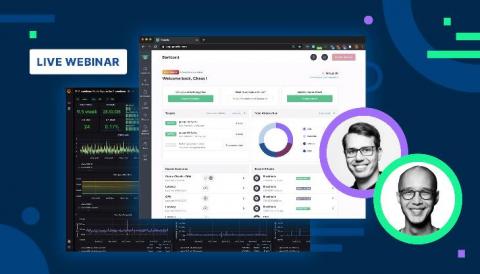
Is your Grafana dashboard ready to spot chaos?

When it comes to systems reliability, you wouldn’t normally think that unleashing additional chaos would actually be helpful, would you? As more engineering teams moved toward microservice-based architectures for cloud applications over the course of this past decade, many of them didn’t change their testing strategies.

Transitioning from the ELK Stack to Logz.io in 5 Quick Steps

At Logz.io, we’ve built our Log Management solution on the ELK Stack because we know it’s what modern engineering teams prefer. It’s familiar, powerful, and integrates easily with other DevOps and cloud technologies. That’s what makes migrating from ELK to Logz.io a seamless process. This means current ELK users can easily transition to Logz.io. If you’re currently using ELK, you can ship the same data using exactly the same shipping mechanisms.

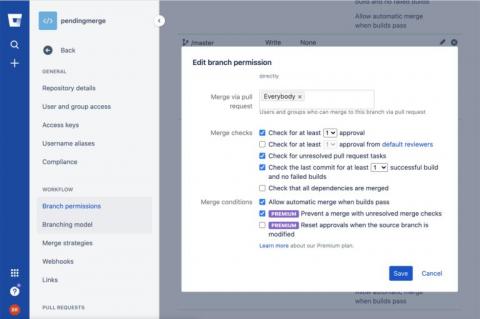
Automatic Merging When Builds Pass

Today Bitbucket is releasing a new labs feature, "Pending Merges", which allows for automatic merging of pull requests when builds pass. This means no more continually checking back in on your pull request, just waiting and waiting for your builds to pass before you can finally merge it. You will no longer be forced to begrudgingly fix that one-character whitespace typo in your comment that you really should fix, but that means you're in for another 30-60 minutes of watching your builds.

Monitoring and Securing Cloud-Based Databases Is the Developer's Responsibility

Modern application development requires more work to ensure the development path and the data it produces are fully in sync, secure, optimized, and error-free. This responsibility has increasingly fallen upon application developers. They’re being asked to double as database administrators to maintain fluidity in the process and support an agency’s rapid release cycle.

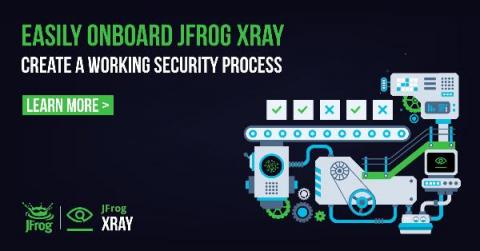
Best Practices for Onboarding JFrog Xray

Introducing, adding, or replacing a new SCA (Software Composition Analysis) tool such as JFrog Xray into your SDLC, if not handled correctly, can be very disruptive to the SDLC and organization. This blog post provides recommended best practices for onboarding JFrog Xray; in order to reduce disruption, improve adoption, and shift left to create a DevSecOps behaviour.

Ivanti Integrates Ivanti Neurons Platform with Splunk Security Operations Suite

We have unveiled several exciting announcements recently, from the launch of Ivanti Neurons to all of our strategic partnerships and integrations (see the details on Intel and Qualys). In fact, we have had so much content to announce that we've needed to create a whole new blog category! But this train is not slowing down any time soon.

DNS Monitoring 101 - Troubleshoot Anycast DNS Issues

Today’s Tip of the Day is the final of three focused on Domain Name System (DNS) monitoring. In the rest of the series, we looked at how digital experience monitoring (DEM) can (i) help ensure users are served by the correct DNS server to reduce latency and (ii) help to guard against DNS-related attacks. In today’s post, we talk about Anycast DNS, the advantages it provides, the challenges it presents in relation to troubleshooting DNS issues, and how to overcome them with Catchpoint.

Service monitoring and availability made simple with Elastic Uptime and Heartbeat

In the world of IT, availability can mean a lot of things. Your website is available if it is up, responding in a timely manner, sending the correct headers, and serving a valid certificate. Your network is available if the correct hosts are online, responding to ICMP pings, and responding to TCP requests on specific ports. Your API endpoint is available if it returns the correct values when sent specific requests.