Operations | Monitoring | ITSM | DevOps | Cloud

A Clear Path to Automated Optimization of Application Performance

Rancher has helped thousands of organizations manage their transitions to containerized applications and Kubernetes. With its innovative distribution and suite of services, Rancher has given IT and DevOps teams the roadmap they needed to drive Kubernetes success. Given the complexity of Kubernetes and the shortage of engineers with Kubernetes-specific skills, Rancher’s offerings meet a critical and growing market need.


Announcing Chaos Conf 2020 (Online): Be Prepared For Moments That Matter

We’re excited to announce the third annual Chaos Conf! Given the events with Covid-19 this year, we will be holding this event fully online for the health and safety of attendees. The unforeseen impact of this virus on our lives, our businesses, and our software highlights the importance of preparing for the unexpected. Our theme for this year highlights this: Prepare for moments that matter. Chaos Conf will take place over the course of three days: October 6–8.

Configuring Flowmon Using Presets

Nobody wants to spend hours configuring a product. It should just work. Flowmon’s customers, partners, and distributors are fortunate in having a number of presets at their disposal for speedy configuration, whether during initial deployment, adjusting the product to new circumstances, or a quick product demonstration. There is no laborious setup; the user just chooses a use case, follows a few guided steps, and lets the system set everything up.

Why "No-Code" Tools are a Non-Starter for Developers

Many attempts to simplify programming lead to visual interfaces that provide approachable settings for common tasks. These simplifications may appeal to non-developers, but they send experienced coders running for the command line. Yet, no code tools are rapidly expanding. Zapier, Integromat, and Workato are becoming more popular options and some believe developers won’t be needed for most integrations in the future.

A Successful ITSM Implementation Starts With 4 Checkboxes

You’ve been contemplating adopting a new ITSM solution for some time. The current one handles the bare minimum—it helps your team churn through a ticket queue—but you know there are other solutions capable of more. So what’s standing in your way? Implementing that new platform seems time-consuming and stressful. But it doesn’t have to be.

SwampUP Leap: AppsFlyer Transforms Its Artifact Management with Artifactory's Single Source of Truth

At swampUP 2020, DevOps platform engineer Roman Roberman spoke about AppsFlyer’s need to gain control and automate their development environment. AppsFlyer’s mobile app Attribution Analytics platform helps marketers measure and optimize their user acquisition funnel. Headquartered in San Francisco, AppsFlyer operates 18 global offices, and its platform is integrated with over 2,000 ad networks, including Yahoo, Google, and Bing.

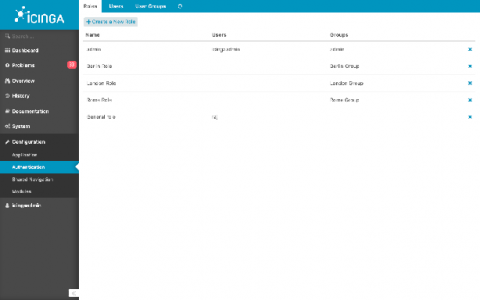
Icinga Web permissions and restrictions (how do they work, examples)

Permissions and restrictions are something used to control how much access is provided to a particular user or user group. Therefore one must first understand what is the role of a user or a group. Here, you will understand permissions and restrictions through configuring users, user groups and roles. They can either be created using configuration files or web interface. When the Icinga Web 2 is installed a default user with admin access is configured.

PagerDuty Paying Dividends for Form3's Digital Payment Platform

Your payment systems have slowed to a crawl, customers are getting impatient and abandoning their shopping carts both online and in stores, and you’re losing money every minute this problem goes on. Behind the scenes, technical responders are scrambling to resolve the issue before it impacts more customers—and before even more money is lost.

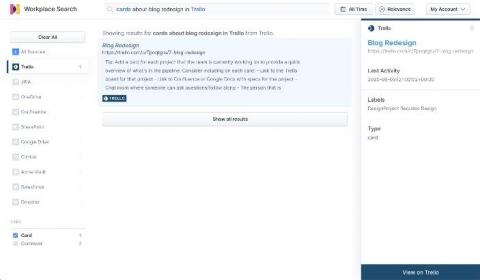
How to ingest data from Trello into Elastic Workplace Search

In our previous post, we introduced the concept of the Elastic Workplace Search Custom Source API as a means of adding data for which a prebuilt content source integration isn’t available. We used a simple example — a CSV file of contact information — to demonstrate the process along with the use of the associated REST API. In this post, we explore ingesting data from a more complex organizational source: Trello.