Operations | Monitoring | ITSM | DevOps | Cloud

Managing access in Grafana: a single stack journey with teams, roles, and real-world patterns

When multiple teams use Grafana, it can start to feel a bit messy. Dashboards pile up, permissions become unclear, and teams accidentally overwrite each other’s work. To help you and your organization stay clear, collaborative, and secure, we recommend putting all users in a single Grafana Cloud stack and managing access with teams, roles, and folders. To illustrate this, I’ll share a hypothetical example of how you can put this into practice across three teams. Let’s dive in!

A practical guide to error handling in Go

When you first start coding in Go, you quickly learn how error handling in the language differs from error handling in languages such as Java, Python, JavaScript, or Ruby. In those languages, throwing an exception automatically generates a stack trace. Go, by contrast, provides no built-in error tracing to reveal an error’s origin.

Essential Patch Management for Azure Tools #shorts

Essential Patch Management for Azure Tools Development tools are vital for effective patch management. Some components can be updated automatically, while others require manual updates due to possible disruptions. The operations team is responsible for addressing critical vulnerabilities in Azure tools, which necessitate thorough investigation. Additionally, vulnerabilities in Visual Studio and Azure VMs must also be managed by both development and operations teams to ensure system security.

iOPEX Highlights and moments

At iOPEX, June was a celebration of our people, purpose, and shared culture. Our Town Hall brought teams together to honor the people behind our progress, recognizing the dedication, innovation, and passion that drive us forward. In Chennai, our Health Camp encouraged proactive care, offering employees personalized wellness insights and preventive screenings. The International Yoga Day had teams pause to breathe, stretch, and reconnect. And across Bangalore and Chennai, the iOPEX Premier League saw teams compete with energy, integrity, and unmatched camaraderie.


How to Use AI for Operational Excellence

Organizations are under immense pressure to do more with less – streamline operations, reduce costs, all whilst improving both the outcomes of the business and their employees. For IT and end-user computing (EUC) professionals, this challenge is especially prevalent. Systems are becoming increasingly complex, the digital employee experience is now directly tied to customer satisfaction, and the role of technology teams extends much further than solely keeping the lights on.

Broadcom Recognized as a Leader: Engineering the Future of Service Orchestration

In our digitally transforming world, the pace of change is relentless. Businesses are tasked with managing increasingly complex hybrid environments, from core mainframes to dynamic cloud services. The pressure is on, not only to keep the lights on, but to innovate faster, deliver flawless services, and fuel business growth. In this high-stakes environment, service orchestration and automation platforms are no longer just a tool—they are the central nervous system of the modern enterprise.

Crash reporting for gaming consoles is now Generally Available

TL;DR: Error monitoring and crash reporting for all major gaming consoles is now generally available (plus, the v1.1 of our Unreal Engine SDK). Already convinced? Jump to the ‘What’s In The Release?’ section. Over a decade ago, a customer hacked Sentry into their PlayStation 3 games. Fast forward to today, Sentry now supports thousands of game developers across web, mobile, and desktop. The missing piece? Consoles. Developers asked for it. We built it.

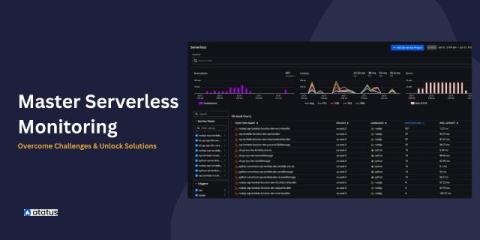
Serverless Monitoring Made Simple: Challenges and Solutions with Atatus

Serverless computing has revolutionized the way applications are built and deployed by eliminating infrastructure management and enabling automatic scaling. However, the dynamic and distributed nature of serverless architectures presents unique monitoring challenges that can impact application performance and user experience.

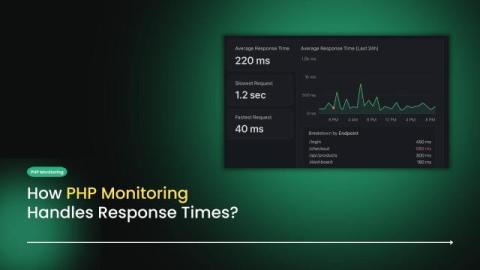
How PHP Monitoring Handles Response Times?

Every millisecond matters when users interact with your PHP application. If a page lags or a request takes too long, most people will leave without a second thought. For DevOps teams, these slowdowns are frustrating because the root cause is rarely obvious. Developers are left combing through logs and traces, often realizing too late that poor response times are already hurting user trust and business outcomes. The pain point: slow PHP response times frustrate users and create hidden costs for teams.