Operations | Monitoring | ITSM | DevOps | Cloud

Testing AI with AI: Why Deterministic Frameworks Fail at Chatbot Validation and What Actually Works | Harness Blog

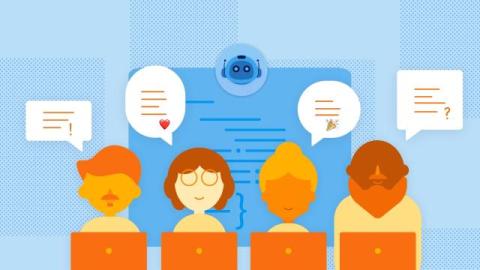
Chatbots are becoming ubiquitous. Customer support, internal knowledge bases, developer tools, healthcare portals - if it has a user interface, someone is shipping a conversational AI layer on top of it. And the pace is only accelerating. But here's the problem nobody wants to talk about: we still don’t have a reliable way to test these chatbots at scale. Not because testing is new to us. We've been testing software for decades.

Why Connected Platforms Will Power the Next Generation of AI in Engineering | Harness Blog

AI is quickly becoming part of the engineering workflow. Teams are experimenting with assistants and agents that can answer questions, investigate incidents, suggest changes, and automate parts of software delivery. But there is a problem hiding underneath all of that momentum. Most engineering environments were not built to give AI the context it needs. In many organizations, the service catalog lives in one place. Deployment data lives in another. Incident history sits in a separate system.

Komodor Provides Autonomous AI SRE Troubleshooting for ClusterAPI

Cluster API (CAPI) is transforming how organizations deploy and manage fleets of Kubernetes clusters by introducing declarative, Kubernetes-style APIs to automate cluster provisioning and lifecycle management. While CAPI excels at creating consistent and repeatable cluster deployments across different infrastructure providers, operating it at a massive scale introduces unique day-to-day challenges.

Introducing OrionIQ: The End of Manual Observability

OrionIQ is Logz.io’s new agentic observability platform designed to move teams from detecting issues to resolving them automatically. As AI accelerates software development, operations remain manual: engineers still wake up at 2 a.m. to investigate alerts and rebuild context. OrionIQ uses AI agents to analyze real-time telemetry, investigate incidents, identify root causes, and take action across systems.

7 AI productivity lessons from the CTO of Superhuman

Most companies have built AI into their product by now, and many consider it the central feature of what they’re building. But plenty of those same companies are still figuring out how to get their own engineering teams to actually use AI tools day to day. When Loïc Houssier joined Superhuman as CTO in early 2025, his team was in that exact spot. The company had been shipping AI email features for years, but internal adoption of AI dev tools was still early.

AI Enablement for Dev Teams: The 6-Pillar Flywheel

AI adoption is already happening on your team, whether you have a strategy or not. Tracy Lee (CEO of This Dot Labs, Microsoft MVP, Google Developer Expert) breaks down the AI Enablement Flywheel — a 6-pillar framework used by successful engineering organizations to move from scattered experimentation to scalable, ROI-positive AI workflows.

Rovo Chat in Bitbucket now understands your Pipelines

Why did your build fail? Ask Rovo, get a clear answer, and even a way to fix it, from anywhere in Bitbucket Pipeline debugging is one of the most common and most painful parts of the development workflow. In our Atlassian research: AI adoption is rising, but friction persists, over 50% of developers reported losing more than 10 hours each week searching for information, onboarding to new code, or toggling between apps.

AI Didn't Change the Game, It Just Exposed Your Bottlenecks w/ Ganesh Datta (CTO, Cortex)

Every engineering org says they want to improve reliability — but most can't even agree on what "good" looks like. Ganesh Datta, Co-Founder and CTO of Cortex, has spent the better part of a decade helping companies confront that gap.

Top 5 Must-Have Integrations for Your Zendesk Suite in 2026

Modern customer support demands more than a basic ticketing system - it requires strategic zendesk integrations that connect your support team with AI automation, real-time analytics, quality control, multilingual content, and unified customer data. In 2026, businesses that fail to build this integrated ecosystem will struggle to meet rising customer expectations for speed, personalization, and seamless self service across channels.

Cracking the Code: How Undetectable AI Actually Works to Bypass Modern AI Detectors

In the rapidly evolving digital landscape of 2026, the tug-of-war between artificial intelligence and content authenticity has reached a fever pitch. As creators, marketers, and SEO specialists, we find ourselves in a constant cycle: we use AI to scale production, only to be met by increasingly sophisticated AI detectors designed to flag our work as "robotic.".