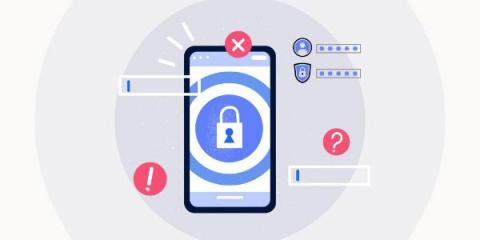
COPE stands for Corporate Owned Personally Enabled Device. These are devices that are owned and provided by the company for work but are also expected to be used for personal reasons. It’s a term that’s especially relevant today, with the adoption of Everywhere Workplace, as companies are giving employees more freedom with corporate-owned and controlled devices.
In an earlier blog post, we had discussed how server performance monitoring is not just about monitoring CPU, memory, and disk resources anymore. There is more to server performance monitoring than just three resources or metrics. That blog post covered several key performance indicators (KPIs) that IT teams must track to ensure that their servers are performing well. In this blog post, we focus on another KPI – server uptime.
Before continuous integration came to be, setting up builds was no fun because the complexity and overhead involved in a release cycle was compounded by inflexible, manual processes. The release cycle was slow and often resulted in breaking changes. Continuous integration and continuous delivery (CI/CD) has changed much of that through pipelines that automate how we build and test software—today, we can deploy, have builds fail, and resolve any errors faster than ever.
Over the last couple years, cloud transformation has become increasingly critical, evolving from a preferable priority to an urgent imperative. In our rapidly changing world, organizations have had to innovate at unprecedented rates — and those most successful are harnessing the power of cloud to move faster and smarter. But it’s more than a simple migration.
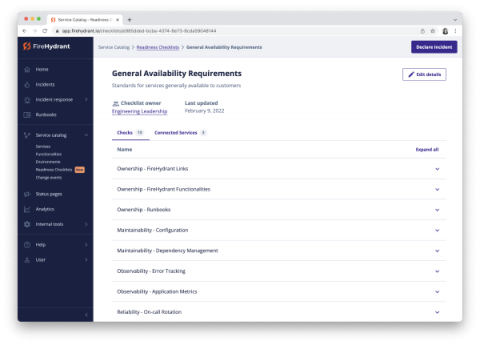
Maintaining the reliability of complex services just got easier with Operational Readiness Checklists. Service owners and engineering leaders can now evaluate and maintain the production readiness of the services their users rely on every day: spot risks in your service dependencies before they cause incidents, and respond quickly if they do. Before you put a new service into production, readiness checklists help you dot-your-is and cross-your-ts.
Welcome to Part II of this three-part blog series on adopting the low latency Ubuntu kernel for your embedded systems. In case you missed it, check out Part I for a brief intro on preemptable processes in multiuser systems and memory split into kernel and user space. The low-latency Ubuntu kernel ships with a 1000 Hz tick timer granularity (CONFIG_HZ_1000) and the maximum preemption (CONFIG_PREEMPT) available in the mainline Linux kernel.
Over the last two years much of the Global workforce has experienced remote working first-hand. Sound familiar? For many, this was a ‘career first’, changing their views on the effectiveness of remote working. The desire to be office based has reduced dramatically with people wanting to avoid time-consuming commutes. In a recent survey, a staggering 91% of US workers wanted home working to persist post pandemic.
Change is the only constant, particularly in a rapidly evolving industry like IT. Software gets constant updates, new hardware gets launched, and frameworks evolve with trends. Staying up-to-date on these changes can help you stay ahead of the competition. But it's not always easy to get people used to these new changes. It’s no surprise that change management has been a key aspect of ITIL.
At Datadog, we’re dedicated to building a platform that helps teams detect, troubleshoot, and resolve issues in their applications and infrastructure. We know that our customers need to be able to debug issues, explore ideas, and manage incidents efficiently, and that means having access to tools that can help them seamlessly share information and leverage the expertise of their distributed teams.