The following Prometheus exporters best practices will help you implement a monitoring solution based on Prometheus, and will also increase your productivity. Prometheus is one of the foundations of the cloud-native environment. It has become the de-facto standard for visibility in Kubernetes environments, creating a new category called Prometheus monitoring.
I’m excited to announce an extension to Netdata’s series A funding in the amount of $14.2M, bringing the total amount of funding to $31M. We’re thrilled to share the news; the additional funding will help us continue building the future of health monitoring and performance troubleshooting. In case you missed it, our mission is to redefine infrastructure monitoring. Our unique approach to building the right solution with and for the community is no easy task.
Connecting Sentry and PagerDuty is a great way to make sure important issues don’t get stuck in backlog purgatory. But sometimes there’s a drop-everything critical issue that can’t wait for a sprint planning meeting. That’s why we’re extending our PagerDuty integration to support Metric Alerts.
Monitoring has never been simple, but there was a time when it was simpler. You had a device you could collect data from; you knew the metrics you needed to monitor, and if something went wrong, you could find the root cause. But as IT becomes increasingly and exponentially more complex, more devices, more environments, more things to monitor, more updates, more data, more everything; monitoring in general needs to grow with it.
Most modern applications today are being designed as a set of microservices with each service running as an independent application. This simply implies that one large application is broken down into small Apps running independently and only communicating with each other. This of course makes it much easier to build and maintain Apps but also offers way more value when combined with containerization technology.
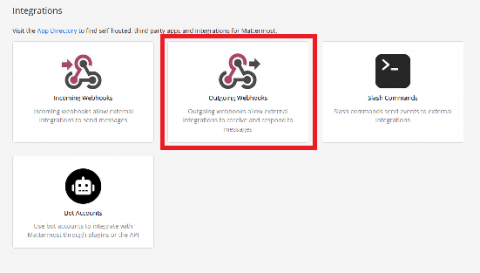
In a previous article, you learned how to receive data from an external source. In this article, you learn how to send a request or data to an external source using outgoing webhooks. As you learned from the first article in this series, we already receive alerts in Mattermost when the temperature of our fridge is too high. But what if we want to send a request to our fridges to give us the current temperature?
Tigera is pleased to announce that we have open-sourced Calico for Windows and made it immediately available for all to use for free. With the launch of open-source Calico for Windows, the vast ecosystem of Windows users now has unprecedented access to Kubernetes via the industry’s de-facto standard for Kubernetes networking and network security.