Operations | Monitoring | ITSM | DevOps | Cloud

From Dial-Up to the Cloud: Why APM is Not Enough in the Age of the Internet

What would you be doing right now if the Internet didn't exist? The world wide web as we know it is only a few decades old, but it's hard to imagine life without it. I fondly recall the early days of the "personal" Internet, when I used a 56k modem and waited anxiously for that oh-so-familiar connecting sound to access my AOL account and check if I had mail. We've come a long way from those humble beginnings.
Qovery and Doppler Join Forces to Empower Developers with Next-Level Cloud Deployment and Security

I am excited to announce the partnership between Qovery and Doppler. Qovery is an infrastructure automation platform that helps developers deploy their applications more easily, while Doppler is a fully managed SecretOps platform that enables engineering teams to better manage their environment variables and secrets.

Automatically Create Incidents from Alerts with Alert Routing

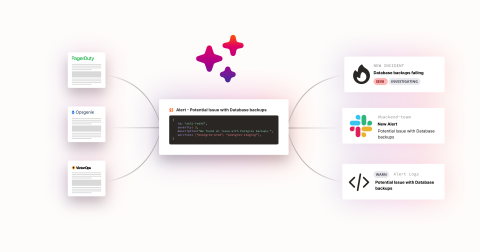
Shouldn’t your alerts be doing more of the work for you? A noisy channel with every alert from hundreds of monitors and microservices is a chaotic place to actually find the incidents that are impacting your customers. And it still requires a heck of a lot of human intervention. We think it’s time for something better. Today we’re releasing Alert Routing: the next phase of worry-free automation from FireHydrant.

Practical tips for rightsizing your Kubernetes workloads

When containers and container orchestration were introduced, they opened the possibility of helping companies utilize physical resources like CPU and memory more efficiently. But as more companies and bigger enterprises have adopted Kubernetes, FinOps professionals may wonder why their cloud bills haven’t gone down—or worse, why they have increased.

New One-click Dashboard Templates in eG Enterprise v7.2

One-click dashboard templates are among a number of tools available within eG Enterprise to allow organizations to rapidly set up targeted and bespoke views for a wide range of audiences across their organizations, whilst avoid the costs and inconsistencies of building and maintaining many individual dashboards.

What Can Go Wrong for Logistics Companies Without Geofencing?

Logistics does not only involve getting company resources from point A to point B. When a company has a logistics arm, they also need to develop the practice of field service management. This applies to any kind of customer-facing logistics, whether they are service vehicles for on-site support or company cars for client visits. Unfortunately, some organizations are immature when it comes to their field service management, employing only the most bare-bones approach to the discipline.

How ITSM Helps Drive Exceptional Digital Employee Experience

Throughout the pandemic, we heard quite a bit about digital transformation initiatives. Companies are often looking for ways to leverage technology as a competitive advantage to accelerate business outcomes. However, if we’re looking for a true digital transformation, we need to take one step back and look at how the increasing use of technology affects our employees and the future of work.

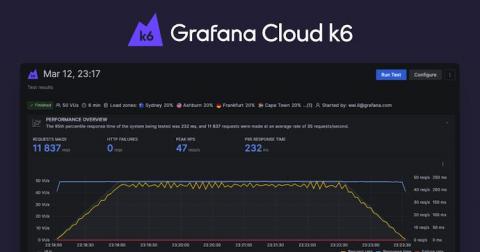
Introducing Grafana Cloud k6: unified performance testing and observability

Organizations use load and performance testing to prevent issues from impacting customers, which is essential if they want to stay relevant in today’s digital-first world. And with the rise of cloud native technology and DevOps, software teams must shift performance testing left, towards development. However, traditional load and performance testing tools simply haven’t kept pace, leaving developers, operations, and QA teams siloed.

IT Operations in 2023: Mapping IT to Business Goals

Welcome to 2023! As we transition from 2022 — which in many ways was exciting for undesirable reasons such as the lingering pandemic, conflict in Ukraine, and uncertain economic conditions — I am eager to look ahead to anticipate themes that will affect IT or, more specifically, IT Operations. As vendors, customers, and practitioners, we’ve worked in IT through many eras of disruption.