Operations | Monitoring | ITSM | DevOps | Cloud

The latest News and Information on Monitoring for Websites, Applications, APIs, Infrastructure, and other technologies.

Debug frontend issues with AI: Real user monitoring meets the Coralogix MCP server

It is 2 AM. Someone on-call gets paged. Conversion rates on the checkout page dropped 30 percent in the last hour. The immediate questions are familiar. Is this a JavaScript error? A slow API call? A broken third-party script? A performance regression that never throws an exception but quietly drives users away? In most teams, answering those questions is not hard because the data is missing. It is hard because the investigation is split across too many places.

Bitbucket outage on April 16, 2026: StatusGator detected issues 77 minutes earlier

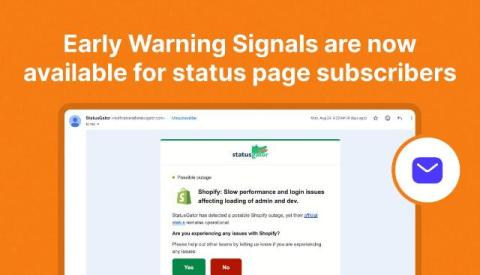
On April 16, 2026, Bitbucket experienced a widespread outage that disrupted pipelines and core functionality for users around the world. StatusGator detected the issue 77 minutes before the provider officially acknowledged it, using its Early Warning Signals. This early detection gave teams critical time to respond, even while the official status page still showed everything as operational.

Network Instability: What It Is, What Causes It, and How to Fix It

Network outages are easy. Something goes down, alarms fire, you fix it, life moves on. Everyone understands a full outage. It's clean, binary, and at least somewhat predictable. Network instability is the opposite of all that. Nothing fully breaks. Nothing fully works. The ping responds. The connection shows active. And yet users are complaining about choppy calls, sluggish apps, and sessions dropping for no apparent reason. You run a speed test, and it's fine.

Every team should be A/B testing

Technical teams want to know the newest, most cutting-edge tools they can implement to give themselves a competitive advantage, whether it’s the latest developer framework or modern CI/CD practices that boost velocity. But there’s one tool from all the way back in the 1920s that can improve any organization, no matter its scale: the randomized, controlled trial—or simply put, experiments.

Setting Up an MQTT Data Pipeline with InfluxDB

In this blog, we’re going to take a look at how you can set up a fully-functioning, robust data pipeline to centralize your data into an InfluxDB instance by collecting and sending messages with the MQTT protocol. We’ll start with a brief overview of the technologies and protocols used in the pipeline, then dive into how you can connect, configure, and test them to ensure your data pipeline is fully functional. It’s going to be a long post, so let’s jump right in.

Healthchecks.io Now Uses Self-hosted Object Storage

Healthchecks.io ping endpoints accept HTTP HEAD, GET, and POST request methods. When using HTTP POST, clients can include an arbitrary payload in the request body. Healthchecks.io stores the first 100kB of the request body. If the request body is tiny, Healthchecks.io stores it in the PostgreSQL database. Otherwise, it stores it in S3-compatible object storage. We recently migrated from a managed to a self-hosted object storage.