Operations | Monitoring | ITSM | DevOps | Cloud

The latest News and Information on Monitoring for Websites, Applications, APIs, Infrastructure, and other technologies.

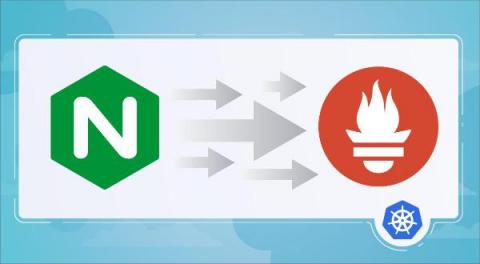
How to monitor nginx in Kubernetes with Prometheus

nginx is an open source web server often used as a reverse proxy, load balancer, and web cache. Designed for high loads of concurrent connections, it’s fast, versatile, reliable, and most importantly, very light on resources. In this article, you’ll learn how to monitor nginx in Kubernetes with Prometheus, and also how to troubleshoot different issues related to latency, saturation, etc.
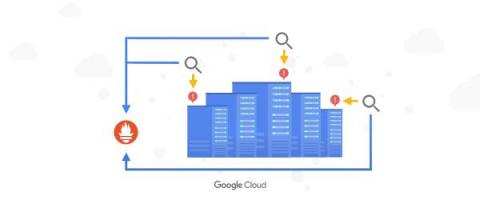
Cloud Monitoring metrics, now in Managed Service for Prometheus

According to a recent CNCF survey, 86% of the cloud native community reports that they use Prometheus for observability. As Prometheus becomes more of a standard, an increasing number of developers are becoming fluent in PromQL, Prometheus’ built-in query language. While it is a powerful, flexible, and expressive query language, PromQL is typically only able to query Prometheus time series data.

3 Enterprise IT Factors That Will Make MSPs More Successful in 2022

A version of this blog first appeared in APMdigest. A new study by OpsRamp on the state of the Managed Service Providers (MSP) market concludes that MSPs face a market of bountiful opportunities but must prepare for growth by embracing complex technologies like hybrid cloud management, root cause analysis and automation.

gRPC - Monitor gRPC calls with OpenTelemetry | Explained with a Go example

OpenTelemetry can only help in generating the telemetry data. In order to store, and analyze that data, you need to choose a backend analysis tool. In this article, we will monitor collected data from gRPC calls with SigNoz. SigNoz is a full-stack open-source APM tool that provides metrics monitoring and distributed tracing. It is built to natively support OpenTelemetry data formats. Hence, it’s a great choice for a backend analysis tool to combine with OpenTelemetry. On a side note, OpenTelemetry provides you the freedom to select a backend analysis tool of your choice.

Application Snapshots: A Valuable Observability Signal for Developers

Monitoring is often not the first thing on the mind of the modern developer. Yet, it’s necessary at many points of the software development lifecycle, including: before deprecating an API, before launching a new feature, after launching the feature, and more. In fact, monitoring needs can vary much more than the classic Ops monitoring.

Madrid improves the services of the EMT monitoring the data of its buses

The public service of buses of Madrid, the EMT, was one of the protagonists of Global Mobility Call that took place the 14th and 16th of June in IFEMA. The company from Madrid exposed its future plans tracing the route to continue transforming the capital into a Smart City where sustainable mobility and independent vehicles acquire great relevance. Nevertheless, executing this plan would be impossible without a technology characterized by generating data on a steady basis.

Introducing Metric Alert notification charts and Duplicate Alerts

Unless you stare at Sentry all day waiting for error or performance problems to pop up, chances are you rely on alerts to let you know when something breaks or slows down. There are two types of alerts you can set up: 1) Issue Alerts, which are tied to issues that meet predefined criteria, and 2) Metric Alerts, which trigger when error volume or performance metrics like apdex, latency, or throughput surpass a pre-defined threshold.

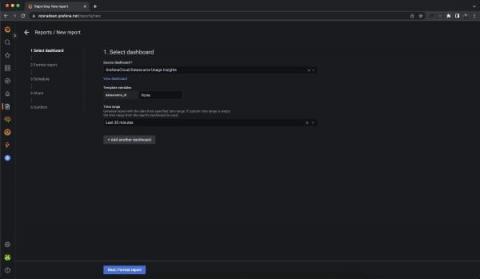
Grafana reporting: How we improved the UX in Grafana

Behind every feature in Grafana, no matter how big or small, lies a lot of hard work, commitment, and attention to detail. At Grafana Labs, we use a cross-functional team approach to come up with ideas and solutions that ultimately make our products more usable, resilient, and adaptable to user needs. To achieve this, we work collaboratively across the UX, product, and engineering disciplines.