Operations | Monitoring | ITSM | DevOps | Cloud

The latest News and Information on Monitoring for Websites, Applications, APIs, Infrastructure, and other technologies.

Using Satellite Server for distributed environment monitoring

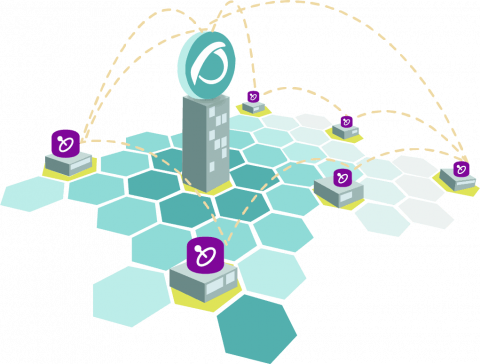
Today we will talk about one of the most versatile elements that Pandora FMS Enterprise offers us for monitoring distributed environments, the Satellite server. It will allow you to monitor different networks remotely, without the need to have connectivity directly from the monitoring environment with the computers that make it up.

Understanding Cardinality in a Monitoring System and Why It's Important

The journey to becoming cloud-native comes with great benefits but also brings challenges. One of these challenges is the volume of operational data from cloud-native deployments — data comes from the cloud infrastructure, ephemeral application components, user activity, and more. The increased number of data sources does not only increase datapoint volume – it also requires that monitoring systems store and query against data with higher cardinality than ever before.

The 95th Percentile: How to Manage Capacity Before You Run Out

One of the largest challenges with network bandwidth metering is the way traffic flows. Traffic comes in bursts. It’s never a constant, predictable stream of data you can measure once, spec hardware for and be done with (wouldn’t that be nice?!). Instead, you need to account for the dynamic nature of bandwidth utilization and its impact on performance. You’ll never be able to predict every burst of traffic your network experiences.

Visualizing Your Time Series Data with the Highcharts Library and InfluxDB

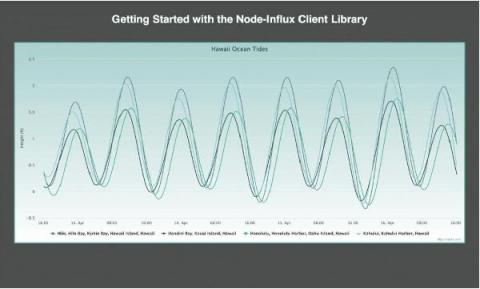
If you’re building an IoT application on top of InfluxDB, you’ll probably use a graphing library to handle your visualization needs. Today we’re going to take a look at the charting library, Highcharts, to visualize our time series data with InfluxDB Cloud. However, I also encourage you to take a look at Giraffe, a React-based visualization library that powers the data visualizations in the InfluxDB 2.0 UI.

Taming Rails Logging with Lograge and LogDNA

Rails is a classic on Ruby for a reason. The framework is powerful, intuitive and the language has a low entry bar. However, being designed when systems existed on a single server, standard Rails logging is excessively fractionalized. Even on a single server, a straightforward call can quickly turn into seven unique, unconnected logs.

Build an Uptime Monitoring System in Ruby with GCE, Cloud Storage, and PubSub

Google Cloud Platform provides developers with many tools to build scalable apps in a way friendlier than AWS. In this article, Olasubomi Oluwalana shows us how we can use the Google Cloud Engine, Storage, and PubSub offerings to build an uptime monitoring system in Ruby.

Metrics first look, more robust frontend and much more - Signal 04

Folks! Great to have you over for our monthly product update aka Signal #04. This month we made great strides in both our frontend and backend pods. Metrics ingestion, testing frameworks, improved tracking features for gRPC calls and much more! We also crossed 200+ members on our slack community 🎉🎉🎉 Let's dive in to see what humans at SigNoz have been upto!

Monitoring Load Balancers with Grafana

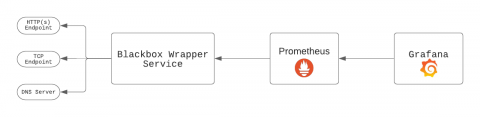
Load balancers play an important role in distributed computing. With load balancers, you can distribute heavy work loads across multiple resources, which allows you to scale horizontally. Since they are placed prior to computing resources, they need to endure heavy traffic and allocate it to the right resources fast. For this to happen, monitoring the health and performance of load balancers is key. In monitoring, visualization helps users to view various metrics quickly.