Operations | Monitoring | ITSM | DevOps | Cloud

The latest News and Information on Monitoring for Websites, Applications, APIs, Infrastructure, and other technologies.

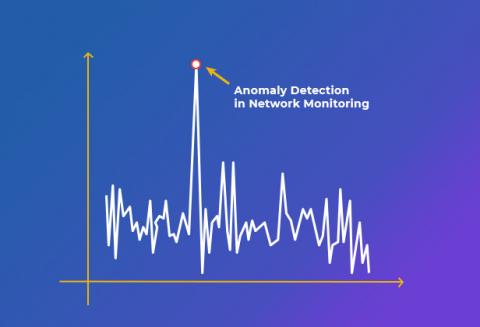
What is Anomaly Detection? It's Role In Network Monitoring

There are some really crucial metrics that are valuable in terms of the insights they offer. Such metrics include user logins, application throughput, network usage and more. Ironically however, some of these metrics are also the ones that are the most variable, having definite valleys and peaks depending on specific times of a week and because of this, it becomes invariably difficult to set up thresholds for analysis and investigation.
Is server monitoring crucial for your business?

While some companies have never experienced a serious outage in services, it's still smart to invest in a monitoring tool for detecting server downtime. In doing so, it's possible to diagnose problems before they spiral out of control. Organizations may first consider free, open-source tools as a cost-effective alternative to paid enterprise versions. However, these free tools require deeper technical understanding to use them efficiently, with regular manual configurations and updates.

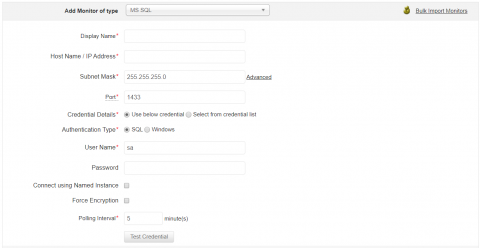
Monitoring MS SQL Server with Applications Manager

MS SQL, Microsoft’s relational database management system (RDBMS), is known for its broad spectrum of capabilities such as transaction processing, business intelligence, and analytics. This is why most businesses trust and invest in SQL for their data storage and access needs. What are the benefits of monitoring SQL servers? Applications Manager offers proactive SQL server monitoring.

Loki quick tip: How to use a Loki datasource in your Grafana dashboard

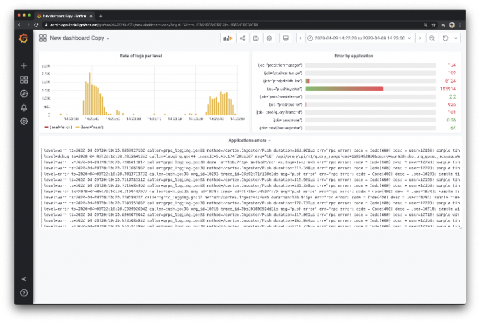
In Grafana, Loki isn’t just for log visualization anymore. Now there’s a simple way to use a Loki datasource as a metric datasource in your graphs. This used to require a hack to make it work – adding Loki as a Prometheus datasource – and the process was very tedious. But Grafana v6.6 integrates Loki even better than before. As a result, right out of the box you can create very nice dashboards about your logs, and mix them with your dashboards about metrics.

Parsing Query Strings in .NET Core

We recently needed to parse and modify some query strings while building Request Metrics. Query string parsing has never been pleasant in .NET, has it improved in .NET Core? We were familiar with HttpUtility.ParseQueryString() for the task, but that API has a major landmine. With the release of .NET Core, Microsoft took another swing at it. We figured we’d try the new way and see how they did! If you want the fully uncensored version, check out the video above.

How to Start Using Counter Caches in Rails

It is widespread to have parent-child associations in Rails applications. On the parent side is a :has_many association, and on the child side is a :belongs_to association. Examples include an article with comments, or an author with books--the former is the parent, and the latter is the child. It is often useful to display a count of the children alongside information about the parent, without necessarily loading all the child records.

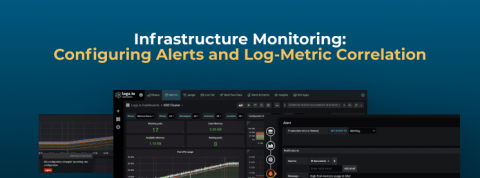
Logz.io Infrastructure Monitoring: Configuring Alerts and Log-Metric Correlation

If you’ve followed our latest blog posts, you’ll have learned how to send metric data to Logz.io and visualize that data on Infrastructure Monitoring – our Grafana-based metrics monitoring solution that we made Generally Available on Monday. At this point you’ll have some nice looking Grafana dashboards in your account.

Orion SDK 101: Intro to PowerShell and Orion API - SolarWinds Lab Episode #86

In this 100-level class, Kevin M. Sparenberg, Technical Content Manager for THWACK®, presents a simple introduction to the SolarWinds® Orion® Software Development Kit (SDK). Instructions include how to download the SDK, installing the PowerShell module, and performing basic read operations within the API. No previous PowerShell or Orion API experience is necessary. Kevin discusses when, how, and why to use the API.