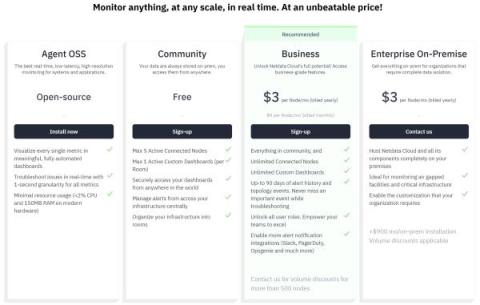
When it comes to observability, your organization will have no shortage of options for tools and platforms. Between open source software and proprietary vendors, you should be able to find the right tools to fit your use case, budget and IT infrastructure. Observability should be cost-efficient, easy to implement and customers should be provided with the best support possible.
Vector search is a powerful tool in the information retrieval tool box. Using vectors alongside lexical search like BM25 is quickly becoming commonplace. But there are still a few pain points within vector search that need to be addressed. A major one is text embedding models and handling larger text input.
Our friends at Tracetest recently released an integration with Honeycomb that allows you to build end-to-end and integration tests, powered by your existing distributed traces. You only need to point Tracetest to your existing trace data source—in this case, Honeycomb. This guest post from Adnan Rahić walks you through how the integration works.
In recent years, the landscape of application development has experienced a paradigm shift, largely driven by the rise of containerization and microservices architectures. Amid this transformation, Express.js has emerged as a dynamic and versatile framework that stands as a one-stop shop for crafting robust web applications. Its popularity owes much to its minimalist approach, allowing developers to swiftly build APIs and web applications with ease.
Kubernetes has revolutionized how modern applications are deployed, managed, and scaled. As the container orchestration platform of choice, Kubernetes provides a dynamic and highly efficient environment for running containerized applications. At the heart of this ecosystem lies the intricate relationship between Kubernetes and the applications residing within its clusters. Applications within Kubernetes clusters are arranged through Pods, which are managed and scaled by various controllers.
In the ever-evolving landscape of modern software development and deployment, Kubernetes has emerged as a prominent solution to manage and orchestrate applications. This technology has redefined how applications are deployed and maintained, offering a flexible and efficient framework that abstracts the underlying infrastructure complexities. In Kubernetes, you define how network traffic should be routed to different services and pods.