
Operations | Monitoring | ITSM | DevOps | Cloud

Video: Identifying Memory Bloat

In this video, we are going to take a look at what memory bloat is, what causes it, and how you can use Scout to eliminate it from your applications. Memory related performance issues have the potential to bring your entire application down, and yet, most APMs completely ignore this fact and fail to provide any useful way of monitoring memory usage at all.
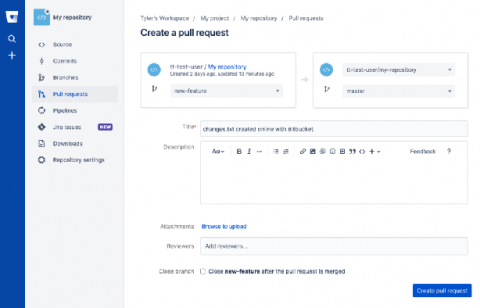
Add file attachments to pull requests in Bitbucket Cloud

During code review, static image files might not be adequate when a developer wants to demo their changes. Starting now, teams can attach any type of file to a pull request. No need to worry about the file size either. For example, “before and after” screen recordings can be uploaded and viewed directly in a pull request. With this change, Bitbucket Cloud has become more integrated with the Atlassian ecosystem. Does your team also collaborate on Jira or Confluence?

ThinkTel Network Assessment for UC Deployment Case Study

Find out how ThinkTel, a provider of advanced hosted, and on-premises, voice, video, conferencing, and data solutions for the Enterprise, Carrier and SMB markets throughout Canada, leverages Obkio’s Network Performance Monitoring solution to perform a network assessment of clients’ network capability to support the specific requirements of Real Time Media and deploy a Unified Communication solution with confidence (Microsoft Teams via Direct Routing, Skype for Business).

#ITConnections - Getting the Most from Your Microsoft 365 User Experience

From email, to word documents, presentations and spreadsheets, Microsoft’s suite of productivity software is an essential tool for most businesses. With Microsoft 365 being cloud-hosted it offers the ability to collaborate from any location. This flexibility comes at a cost, where it presents a new set of challenges to monitor and manage the end user experience. Organizations who are heavily dependent on Microsoft Office 365 simply can’t afford to not have visibility into what users are experiencing.

4 Monitoring Alerts to Automate Service Desk Tickets and Reduce Downtime

Whether you’re a small business with fewer than 100 employees or a global enterprise with thousands, having an alert system integrated into the service desk can be invaluable. This type of cross-functional integration can trigger automatic incidents in the service desk based on certain monitoring events, particularly issues that impact a significant portion of employees, including critical applications and network infrastructure.

The Most Important Android Enterprise Features for Supply Chain - Series 2

In my last post, Getting Started With Android Enterprise in Supply Chain – Series 1, we talked about a couple tools you need to understand before jumping into Android Enterprise. Now that we’ve got that sorted out, let’s talk about the features. Not all of the features, but the ones that are going to really matter in supply chain.

Box - Enhanced Performance Reliability with Catchpoint

Box is a leader in Cloud Content Management, providing users easy access to their information and a secure platform to share and collaborate. Box delivers its cloud-based product via web applications, integrations with partner solutions such as Microsoft Office 365 and G Suite, and publicly exposed and supported APIs that enable customers and partners to integrate Box into their systems. As with any SaaS application, performance, reliability, and availability are critical to the business.

Getting Metrics Into Honeycomb

Honeycomb is an event-based observability tool. Rather than relying on the rigid pre-aggregated measures provided by metrics, Honeycomb instead favors using events because they provide a much greater degree of flexibility. But that doesn’t mean metrics don’t belong in Honeycomb. Our new whitepaper, Getting Started With Honeycomb Metrics, breaks down exactly how to do that.

Putting anomalies into context with custom URLs in Kibana

Machine learning in the Elastic Stack provides you with an intuitive way to detect anomalies in vast data sets. But even the most sophisticated anomaly detection job might not reveal the root cause of anomalous behavior. After an anomaly is detected, you may need to dive into further analysis, review multiple corresponding metrics, and investigate how they relate to the anomalous spike.