Operations | Monitoring | ITSM | DevOps | Cloud

Google Cloud Next '26 Recap: AI, Efficiency, and the Rise of Frictionless Delivery | Harness Blog

‍Summary: Google Cloud Next ’26 focused on the future of software delivery, emphasizing that AI, platform consolidation, and an urgent push toward efficiency are reshaping the Software Development Life Cycle (SDLC). The key takeaway from the event was that organizations are moving from AI experimentation to operationalization, actively consolidating fragmented tools onto end-to-end platforms that embed AI for control, intelligence, and speed. ‍

Shadow IT Is Back - And Vibe Coding Made It 10x Worse

AI coding tools are the new Shadow IT - but instead of rogue Trello boards, they have OAuth access to your code repos, cloud accounts, and production databases. Here's what's already gone wrong, and how platform engineering fixes it. Romaric founded Qovery to make Kubernetes accessible to every engineering team. He writes about platform strategy, developer experience, and the future of cloud infrastructure.

Top tips: When "sounds right" isn't right

Top Tips is a weekly column where we highlight what’s trending in the tech world today and list ways to explore these trends. This week, we’re looking at why convincing AI answers can still be wrong and how to catch them before they slip through. AI doesn’t fail the way it used to. It doesn’t give obviously wrong answers. It gives answers that are just right enough to trust. And that’s exactly why we stop questioning it. It fits into our workflow so easily.

How to use an SRE agent to reduce downtime

An alert in the middle of the night warns of a potential business failure. Manual incident response becomes more complex due to the overwhelming data from distributed and dynamic digital services. With an SRE agent, your engineering team can cut through alert clutter. They can sort through various signals quicker, decreasing burnout and achieving faster, more affordable resolutions. Operational resilience will see its next evolution with Agentic AI.

Detect, Communicate, Resolve: Checkly's Agentic Workflow End-to-End

Coding agents are the fastest-growing audience for the Checkly CLI, and we're doubling down on them. In this session, Stefan hands Claude a real e-commerce app, lets it set up monitoring with `npx checkly init`, generate Playwright tests through MCP, and walk an actual alert end-to-end with Rocky AI in the loop.

Faster fixes, less context sharing: how Grafana Assistant learns your infrastructure before you even ask

When an unexpected alert fires these days, most engineers' first move is to ask their AI assistant for help.You ask why your checkout service is slow and the assistant gets to work, but it can't get any meaningful insights—at least not quickly—without the proper guidance. So, the next thing you know you're sharing deals about your existing data sources, the services you have running, how they connect, which labels and metrics matter, and on and on.

Why dashboards still matter in the age of AI

I recently gave a talk at Experts Live India 2026 about SquaredUp, and even before getting into the demo, there was one question I knew I had to address: Is the dashboard era over? It's something we're all hearing more. "Just ask AI." "Agentic AI will build your dashboards automatically." "Why bother with static views when a chatbot can answer anything?" It's a fair question. Answering it requires a clear understanding of what a dashboard represents.

Context Engineering: How to Manage AI Context at Scale

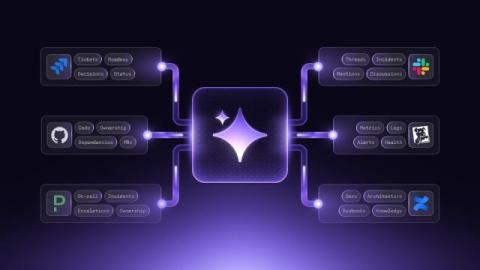
Context engineering is the practice of managing the information an AI model sees (documents, tool outputs, memory, and structured metadata about the systems it reasons over) so it can make accurate decisions inside a real engineering organization. Most engineering teams have access to the same AI coding agents: Claude, GPT, Gemini, the major variants everyone is shipping. The model is no longer the differentiator.

Ticket Taker to Team Leader: Managing an Agentic IT Workforce

The promise of AI in IT service management has been circulating for years. Chatbots that deflect tickets. Virtual agents that answer FAQs. Automation that routes requests. These are useful, but probably not the dream-state you were originally sold. What's different today is the arrival of agentic AI: systems that don't just respond to instructions but reason, act, and adapt across multi-step workflows with real consequences. The question for IT leaders is no longer whether to adopt agentic ITSM.