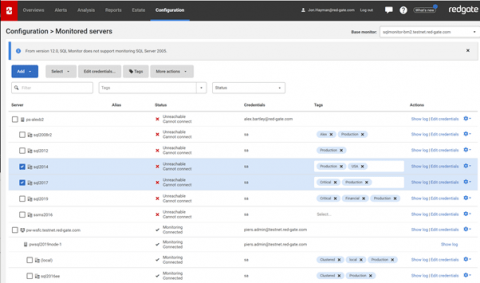
I am excited to share that we’ve just launched our first open source project called ValidKube. The idea behind Validkube is to fuse together the capabilities of three other popular open-source projects (kubeval, kubectl-neat and trivy by Aqua) and present them in a single view, providing users with a way to ensure YAML code hygiene and security, all at the same time and with just a few clicks of the button.
What makes an engineering team? Communication, collaboration, process, order, and common goals. Otherwise, they would just be a bunch of engineers. The same is true of their tools. Connectivity and process turn a bunch of tools into a DevOps toolchain. If you need a DevOp toolchain, you can use it to easily build an incident response process.
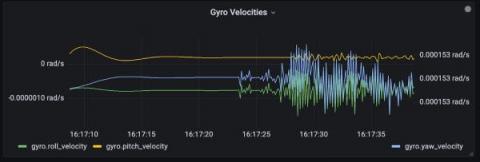
The number of internet-connected assets around us that are powering services and utilities in a wide array of sectors is rising at an exponential rate. As a result, it’s becoming critical for businesses that provide such services and utilities to have an observability stack tailored to the type of physical hardware devices that are generally deployed in swarms.
As you're likely well aware, Rails 7 was released last month bringing a number of new features with it. One of the features we're most excited about is load_async. This features allows for multiple Active Record queries to be executed in parallel which can be a great tool for speeding up slow requests. Since Rails introduces an entirely new infrastructure for load_async, Skylight's existing integration wasn't capturing all of these queries.
The state of cybersecurity today is, in a word, catastrophic. Breaches have become endemic. Not only do they continue at dizzying rates, but they are actually increasing in frequency by the month. Why are things so bad? And why do businesses seem so helpless to make them better? Those are complicated questions without simple answers, of course – but I believe that a major part of the answer has to do with the fact that, at most organizations, security remains the domain of elite security teams.
Having an Enterprise Architecture practice is critical for three key reasons.