Operations | Monitoring | ITSM | DevOps | Cloud

Telegraf Integrations with Logz.io

Logz.io is proud to announce a slew of new integrations via Telegraf. Logz.io utilizes Prometheus in its product, but aims to support compatibility across common DevOps tools. A number of our customers, and the community in general, are strong users of Telegraf and its companion apps in the TICK Stack (which includes InfluxDB). Telegraf is not as popular as Prometheus, but it’s a strong element in the DevOps toolbox.
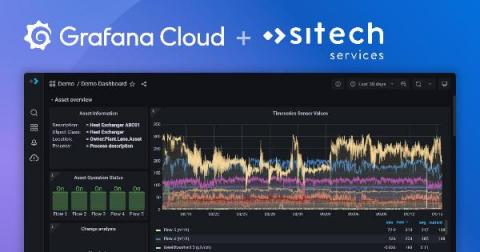

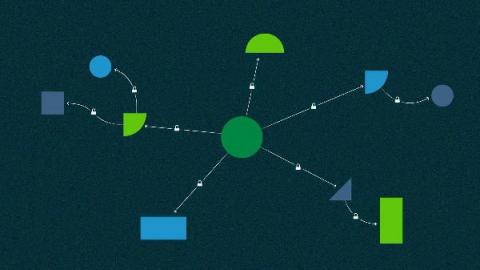
How Sitech builds modern industrial IoT monitoring solutions on Grafana Cloud

Chemelot is an industrial park in the Netherlands with more than 150 companies in chemical and process industries that are working to build the most sustainable and competitive chemical site in Western Europe. Sitech Services is part of making that happen. The Dutch technology firm brings together maintenance and engineering specialists with data scientists to create multidisciplinary solutions that achieve optimal safety, efficient infrastructure, and efficient processes for the plants.

7 traits to look for when targeting new prospects

I came across an interesting sales stat in a 2020 report from Sales Insight Lab. They interviewed 400 sales professional and found that 71% of respondents said at least 50% of the prospects they were engaged with were NOT a good fit for what they were selling. This tells me there is a lot of wasted time and effort trying to convince incompatible businesses to sign with you. So how can you improve your odds of converting prospects?

Tips for designing distributed systems

With companies expecting software products to handle constantly increasing volumes of requests and network bandwidth use, apps must be primed for scale. If you need resilient, resource-conserving systems with rapid delivery, it is time to design a distributed system. To successfully architect a heterogeneous, secure, fault-tolerant, and efficient distributed system, you need conscientiousness and some level of experience.

Monitoring PostgreSQL With pgmetrics and pgDash

I am currently trialing pgmetrics and pgDash for monitoring PostgreSQL databases. Here are my notes on it. pgmetrics is a command-line tool you point at a PostgreSQL cluster and it spits out statistics and diagnostics in a text or JSON format. It is a standalone binary written in Go, and it is open source. Here is a sample pgmetrics report. Rapidloop, the company that develops pgmetrics, also runs pgDash – a web service that collects reports generated by pgmetrics and displays them in a web UI.

Unexpected Parallels Between Yoga and Observability

Yoga is to ideal human health what observability is to an application’s ideal functioning. It is well established that observability is a critical factor for the successful implementation and maintenance of cloud-native, serverless, cloud-agnostic, and microservices-based applications. Well-established observability helps DevOps and development teams cross the boundaries of complex systems and get complete visibility into their functioning.

Getting started with Memory attacks

Memory (or RAM, short for random-access memory) is a critical computing resource that stores temporary data on a system. Memory is a finite resource, and the amount of memory available determines the number and complexity of processes that can run on the system. Running out of RAM can cause significant problems such as system-wide lockups, terminated processes, and increased disk activity. Understanding how and when these issues can happen is vital to creating stable and resilient systems.

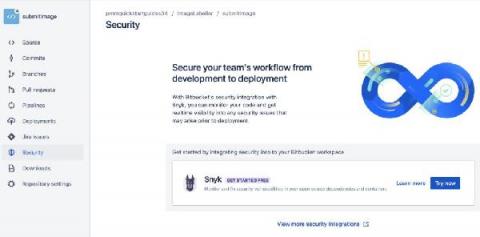
How to integrate security checks into your deployment workflow

As software applications grow in scale and complexity, the surface areas for security vulnerabilities and exploits grow with it. Modern development practices include large amounts of code reuse. First, in the form of language-specific standard libraries such as the C++ STL, the Golang standard library, and Microsoft.NET. Second, in the form of open-source libraries found on places like Github. Much of this code is built using other libraries, introducing a web of dependencies into modern software.

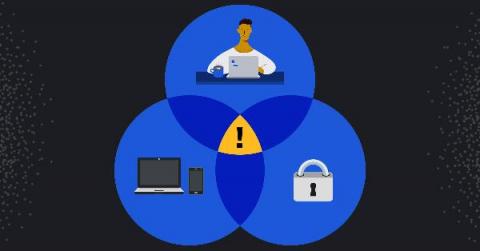
DevSecOps: Collaborate Confidently with Open Source Tools

There is a Cambrian explosion currently underway in the collaboration tools space. The exponential rise in remote working as a result of naturally evolving workplaces and aided by the recent pandemic has created an opportunity for lots of different collaboration tools to take center stage. As our collaboration tools improve, work that would have been nearly impossible to do remotely is becoming more and more common.

Why securing internet-facing applications is challenging in a Kubernetes environment

Internet-facing applications are some of the most targeted workloads by threat actors. Securing this type of application is a must in order to protect your network, but this task is more complex in Kubernetes than in traditional environments, and it poses some challenges. Not only are threats magnified in a Kubernetes environment, but internet-facing applications in Kubernetes are also more vulnerable than their counterparts in traditional environments.