Operations | Monitoring | ITSM | DevOps | Cloud

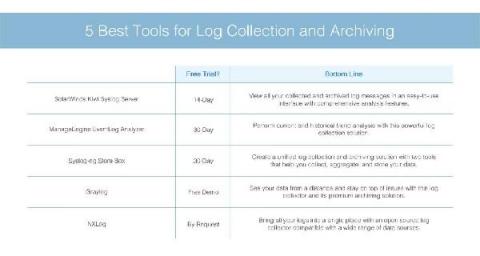
5 Best Tools for Log Collection and Archiving With Guide

Collecting and archiving logs is an essential practice for any organization looking to maintain the performance and security of their network. Logs are like a diary for your devices. They record every message sent from any of your network systems. This information can prove essential for everything from understanding the daily activities of your infrastructure, to improving functionality across your platforms, to identifying and troubleshooting issues.

A Peek at JFrog's Iron Bank Accreditation for Xray and Artifactory

JFrog Artifactory and JFrog Xray recently underwent a rigorous hardening process to earn accreditation for inclusion in the U.S. Department of Defense’s Iron Bank, a centralized repository of digitally-signed and hardened container images. In this blog post, we’re pulling back the curtain on the process, in order to share our insights and lessons learned with our customers and with the DevOps community at large.

Simplifying your Software Asset Management Journey

Software Asset Management (SAM) involves a complex set of challenges, requiring high levels of support and engagement blending the right mix of people, processes, and tools. In the face of this complexity, in organizations that lack the required sponsorship or dedicated SAM functions, managing software assets can disproportionately fall into the asset management tools themselves.

Catchpoint Digital Experience Score Is An Industry-First

Catchpoint recently announced the Digital Experience Score. This score is the first all-encompassing metric to represent all essential drivers of digital end-user experience. With pressure on IT teams ever growing to fix the IT issues of a remote workforce, we wanted to make troubleshooting as straightforward as possible. The score provides IT teams tasked with improving employee experience with a quantifiable measurement of what each employee is experiencing digitally.

How retailers are improving productivity, transforming incident response, and empowering teams with PagerDuty

For retailers, uptime is money and issues can cost thousands of dollars per minute. With infrastructure comprising complex services such as payment gateways, inventory, and mobile applications, maturing digital operations is vital for ensuring services are always on and customers get the best experience.

Observability: The 5-Year Retrospective

Two years ago, I wrote a long retrospective of observability for its third anniversary. It includes a history of instrumentation and telemetry, a detailed explanation of the technical spec, and why the whole “three pillars” thing is nonsense. At the time, it’s what was needed to steer conversations away from silly rabbit holes about data types and back to what matters: how we understand our systems.

How the French Ministry of Agriculture deploys Elastic to monitor the commercial fishing industry

Within the French Ministry of Agriculture and Food (the Ministry), our team of architects in the Methods, Support and Quality office (BMSQ) evaluate and supply software solutions to resolve issues encountered by project teams that affect various disciplines. As data specialists, one area we’ve been involved in includes reconfiguring the traceability of activities for the commercial fishing industry.

Elastic APM iOS agent technical preview released

We are proud to announce the preview release of the Elastic APM iOS agent! This release is intended to elicit feedback from the community, while providing some initial functionality within the Elastic Observability stack and is not intended for production use. Now is your chance to influence the direction of this new iOS agent and let us know what you think on our discussion forum. If you find an issue, or would like to contribute yourself, visit the GitHub repository.

What Are the Limitations of Dashboards?

For modern businesses faced with increasing volumes and complexity of data, it’s no longer efficient or feasible to rely on analyzing data in BI dashboards. Traditional dashboards are great at providing business leaders with insights into what’s happened in the past, but what if they need actionable information in real time? What if they want to use their data to estimate what may happen in the future? Companies are taking notice.