Operations | Monitoring | ITSM | DevOps | Cloud

Everything You Need To Know about Chain-Free Backup

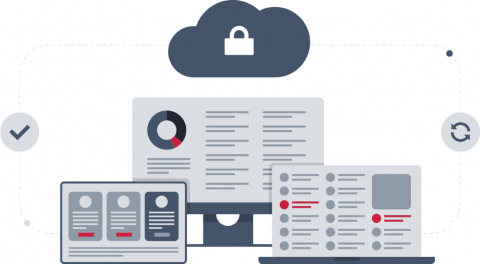
Data loss is catastrophic for any business. TrueList’s data loss statistics point out that “almost 70% of small businesses close within a year of a large data loss.” One of the most effective ways to prevent loss is to backup data. There are multiple data backup solutions available, and one of the newest options is known as chain-free backup.

18 Best Practices for Cloud Automation

Everyone is shifting their workloads to the cloud, but one challenge remains: Workloads need to be automated. Whether they’re employing a cloud-native, cloud server, or hybrid model—IT operations teams need to know what, when, and now also where to automate. Speaking at the recent 2022 Automation Virtual Summit, Dave Kellermanns, Global Advisor for Automation, Broadcom Software explored some lessons learned and best practices for cloud automation. Read on to see some of the highlights.

Autonomously optimize AWS Lambda deployments with Sedai and Datadog

In dynamic production environments, unpredictable traffic loads and frequent code changes can make it difficult for organizations to consistently optimize their cloud infrastructure, resulting in application performance issues, latency, and wasted cloud spend. Teams that manage large-scale cloud infrastructure deployments are often forced to tune their workloads’ configurations using a complicated mesh of script jobs—or worse, manual remediation by on-call engineers prompted by alerts.

3 benefits of AI in the contact center

The quality of customer experience (CX) is declining, according to the American Customer Satisfaction Index. Customer satisfaction is at its lowest point in 17 years: 73.2 out of 100. Many factors are at play here, but there’s clearly an opportunity to improve the experience your customers receive. Adopting new strategies and technologies, such as AI in the contact center, can significantly improve efficiency and competitive advantage in three key ways.

What do best-in-class cybersecurity organizations do differently? | CISO Panel

Have they somehow found unlimited budget for their every tech request? Do they have an uncanny ability to source the diamond-in-the-rough talent? Or is it something else? As part of our inaugural State of Cybersecurity Preparedness research series, Ivanti asked 6,550+ cybersecurity professionals, leaders, and end users what their cybersecurity teams will do in the next 12 months to secure their organizations. But we wanted to know what our cybersecurity experts truly believe set top teams apart from the pack.

Ivanti Neurons for Service Mapping

Automatically discover and map the linkages between underlying data center services and applications to visualize and understand how business services connect and interact to respond quickly to unexpected changes. Data center discovery Extensible probes and sensors automatically discover thousands of physical and virtual compute, network and storage assets in minutes giving you comprehensive visibility into your data center and cloud environments.

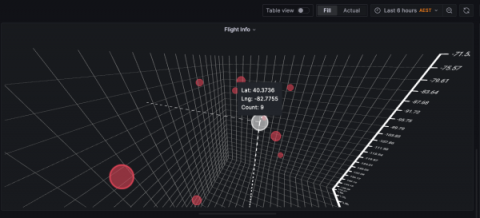
Introducing the XYZ chart: A three-dimensional way to visualize your data in Grafana

This panel is in alpha version and still in development. To use it as is, you need to modify your configuration file and set enable_alpha = true in the panels section. More information can be found on this page. Two-dimensional graphics are the de facto way to visualize data within the observability realm, and Grafana is really good at plotting data this way.

Incident Management KPIs - what really matters

In the age of Big Data and analytics, companies are increasingly using the power of numbers and data to improve their processes. In the incident management world, this means turning to KPIs, metrics, and other incident monitoring methods to recognize trends and take corrective action. ‍ To manage and improve your incident management processes, you have to keep an eye on KPIs and metrics.

Site Reliability Engineer: Responsibilities, Roles and Salaries

DevOps gained popularity in order to combat siloed workflows, decreased collaboration and a lack of visibility across the software development lifecycle. While establishing a culture of DevOps has helped teams collaborate better and deliver reliable software faster, DevOps teams don’t necessarily have someone specifically dedicated to developing systems that increase site reliability and performance. That’s where a site reliability engineer (SRE) comes into the picture.