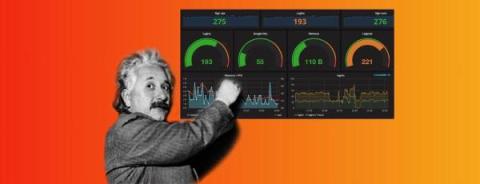
Grafana is one of the most popular dashboarding and visualization tools for metrics. The Grafana Dashboards are a very important part of infrastructure and application instrumentation. In this post, we will deep dive into Grafana dashboards. We will create a Grafana dashboard for a VM’s most important metrics, learn to create advanced dashboards with filters for multiple instance metrics, import and export dashboards, learn to refresh intervals in dashboards and learn about plugins.
In this article, we are going to discuss how to set up Kafka monitoring using Prometheus. Kafka is one of the most widely used streaming platforms, and Prometheus is a popular way to monitor Kafka. We will use Prometheus to pull metrics from Kafka and then visualize the important metrics on a Grafana dashboard. We will also look at some of the challenges of running a self-hosted Prometheus and Grafana instance versus the Hosted Grafana offered by MetricFire.
One of the things I really love about working for Cribl is the ability to help our customers optimize their data. Microsoft Windows Event Logs are something I have always looked to as a proverbial Rosetta Stone to help translate semi-structured, classic-style events into something more efficient and less resource-intensive to search. Extracting field values requires a large number of regular expressions to parse the events, which isn’t ideal.
What is Grafana? How do I change the color of a panel set? Where can I find all public dashboards? Who made the Kessel Run in less than 12 parsecs?
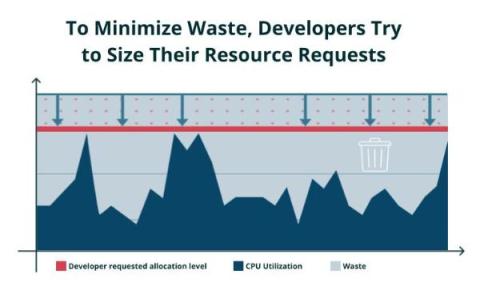
Kubernetes has been around for nearly 10 years now. In the past five years, we’ve seen a drastic increase in adoption by engineering teams of all sizes. The promise of standardization of deployments and scaling across different types of applications, from static websites to full-blown microservice solutions, has fueled this sharp increase.
Only 52% of workers felt satisfied with their latest employee onboarding experience, according to a Paychex survey. That means just under half of new hires are dissatisfied and feel unprepared to start their new jobs. Nearly 40% of survey respondents found onboarding clear, 32% said it was confusing, and 22% said it was disorganized. Four out of five (80%) new hires who feel undertrained due to poor onboarding plan to quit. Poor onboarding experiences aren’t new for HR teams.
Telecommunication (Telco) companies everywhere share a similar vision: future-proofing their organizations for an unpredictable era of challenges and opportunities in an unreliable economy. Rebounds from the pandemic started out slow and patchy, and leading up to present day, moves like inflation-laced price increases and merger and acquisition (M&A) deals have ramped up share prices across the global telecoms sector to climb back up from 2020’s rock bottom.