At Canonical, we often get questions about open-source security and of course, Linux security is a common topic. Based on a recent webinar hosted by our security team and an accompanying blog post, we put together the most common questions we receive. This is by no means an exhaustive list, but it should give you a general idea about Ubuntu’s approach to security vulnerability management, livepatch, IoT, and its compliance and hardening tools.
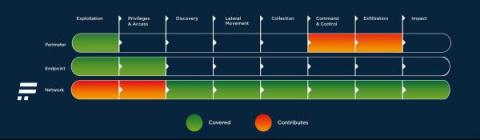
The risk from insider threats has grown massively, with perpetrators frequently getting around organizations' increasingly complex perimeter protections. It is one of the most common ways customer data or industrial and trade secrets leak. This very complex topic includes many types of threats and techniques. Let's discuss how you could detect insider threat activity at a network level.
Kubernetes Secrets are a built-in resource type that's used to store sensitive data. This blog teaches you how to work with Secrets in Kubernetes. Kubernetes can do many things, but we usually refer to it as a “container orchestrator.” Orchestrating containers means starting and restarting them when needed, ensuring their configuration matches the declared state, and autoscaling them. But Kubernetes can do much more than that.
As part of Nexthink’s launch of the new Nexthink Infinity Platform we also launched Collaboration Experience – adding detailed Microsoft Teams and Zoom call telemetry and insights to the comprehensive “See, Diagnose & Fix” capabilities of the platform. After 4 months, we are ingesting telemetry from almost 2 million employee calls and sessions a day – great testimony to the power and scalability of the Nexthink Infinity platform.
“If that doesn’t work, try a bigger hammer.” It’s an old saying we can all appreciate, but it isn’t always the best solution. Regarding the mobile workforce, smaller is sometimes better. As consumers, we’ve watched cell phone handset sizes change: first from large 1980’s car phones to pocketable “brick” phones. Then, smaller “flip” phones were replaced by our larger smart phones, which vary on screen size but remain pocketable.
We recently got this great feedback from a dear user in our Discord: This is great and exactly what we want, a clear problem or improvement we could make to help make that users monitoring life a little easier. This is also where the beauty of open source comes in and being able to build on the shoulders of giants - adding such a feature turned out to be pretty easy by just extending our existing Pandas collector to support SQL queries leveraging its read_sql() capabilities.