AIOps Means Business: IT Innovation for a Competitive Edge
Technical talent is in high demand. According to the Bureau of Labor Statistics, 94% of organizations reported difficulty finding qualified IT staffing.


The latest News and Information on Monitoring for Websites, Applications, APIs, Infrastructure, and other technologies.
Technical talent is in high demand. According to the Bureau of Labor Statistics, 94% of organizations reported difficulty finding qualified IT staffing.
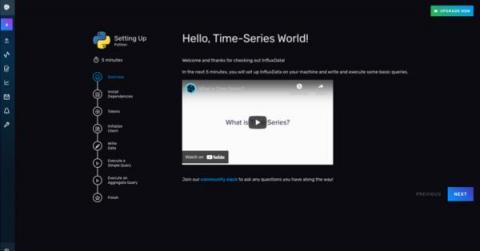
We love to write and ship code to help developers bring their ideas and projects to life. That’s why we’re constantly working on improving our product in sync with developer needs to ensure their happiness and accelerate time to awesome. This is the first in a blog series covering our product’s latest features — features that we think will save you time and effort when building with time series and InfluxDB.
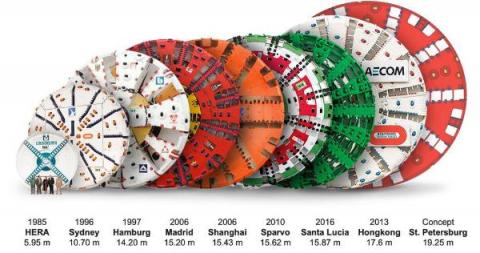
Herrenknecht AG is a technology leader in mechanized tunneling systems. Engineers at Herrenknecht set out to build an industrial internet of things (IIoT) platform that provided insight into live and historic data for all their tunnel boring machines (TBMs). These machines have thousands of sensors generating high velocity data, sometimes in remote areas with limited connectivity.
Here at Grafana Labs, we’re always looking for ways to provide our customers with a choice of platforms where they can run Grafana Enterprise Logs (GEL). As part of that mission, we’re pleased to announce that we’ve added Red Hat OpenShift 4.x support to GEL. GEL, as you may know, is a leading enterprise logs solution.
Welcome to another edition of What’s New in Sysdig in 2022! The “What’s new in Sysdig” blog is now under my control! Hello, I’m Wes MacKay, a Sales Engineer based out of Dallas, TX working with the Sysdig US West Corporate team. I’m way too passionate about containerization, personal cloud storage, and automating my home life. In my spare time, I’m always looking for better Thai and Sushi restaurants in my area.
The software is getting more and more complicated and so is the infrastructure behind it. It is no longer what it used to be with a single web or application server and a database backing it up. Throughout the years, the infrastructure has become more and more complicated. We have multiple databases, queues, datastores, search engines, and configurations. We want to incorporate continuous delivery and automated testing and deploy everything easily.
Eleven basic checks and one status page. That’s all you see when looking over the account usage of the Uptime.com account you are now managing for your company. When you logged in for the first time you saw a dashboard with cards and metrics, labeled with titles that don’t obviously connect to services you offer. Your first clicks were to navigate to view the subscription – maybe your plan details can give you some guidance. Does this sound like you?
Amazon Kinesis is the real-time stream processing service of AWS. Whether you got video, audio, or IoT streaming data to handle, Kinesis is the way to go. Kinesis is a serverless managed service that integrates nicely with other services like Lambda or S3. Often, you will use it when SQS or SNS is too low-level. But as with all the other services on AWS, Kinesis is a professional tool that comes with its share of complications.
In this tutorial, we will go through a working example of a NestJS application auto-instrumented with OpenTelemetry. In our example we will use a simple application that outputs “Hello World!” when we call it in the browser. We will instrument this application with OpenTelemetry’s Node.js client library to generate trace data and send it to an OpenTelemetry Collector. The Collector will then export the trace data to an external distributed tracing analytics tool of our choice.