It wouldn’t be Cybersecurity Awareness month without some spooky-themed blogs with language focused on Fear, Uncertainty, and Doubt (FUD). Luckily, it’s the end of November now, and this isn’t that kind of blog, but what was true in October is still true today. I won’t tell you that you need to be afraid of bad actors infiltrating your security defenses and wreaking havoc in your infrastructure. Why? Because you are likely stressed enough already. Don’t you think?
In this article, we’re going to explore key reasons why companies need status pages. We’ll also dive into the components of an accurate status page that does its job well. This will make it easier for you to set up your own status page, even if you’ve never done it before.
Calico is the industry standard for Kubernetes networking and security. It offers a proven platform for your workloads across a huge range of environments, including cloud, hybrid, and on-premises. Calico has had a high-quality, production-ready, performant, eBPF data plane option for some time! However, although many users are deploying it in production and benefitting, we still sometimes see users who don’t know that Calico has an eBPF data plane or feel confident deploying it, and.
The two words, “Enterprise Architecture”, elicit various reactions and have no standard definition in the dictionary or technical manual— everything from “we tried that and it’s too much work” to “we need that!” to “what does it mean to have an effective EA practice”. Trial and error also taught us it’s possible (even easy) to do Enterprise Architecture incorrectly!
When it comes to the applications, websites, and services we build, the end user ultimately determines whether or not the end product is successful. Even the greatest concepts can fall short if the application does not consistently meet the evolving needs and expectations of the user. Just look at what happened to sites like Myspace or Yahoo.
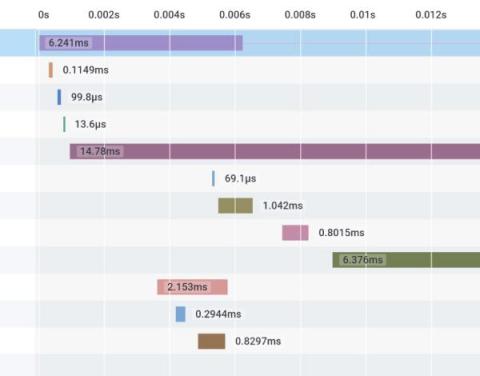
Today, I found a bug before I noticed it. Like, it was subtle, and so I wasn’t quite sure I saw it—maybe I hadn’t hit refresh yet? Later, I looked at the trace of my function and, boom, there was a clear bug. Here’s the function with the bug. It responds to a request to /win by saving a record of the win and returning the total of my winnings so far. Can you spot the problem in the TypeScript? It’s subtle. Now here’s a trace in Honeycomb: Now do you see the bug?