
Operations | Monitoring | ITSM | DevOps | Cloud

Hardening Self-Hosted Artifactory for Agentic Workloads

OpenAI has published a focused follow-up to its July report on the Hugging Face intrusion. This one covers a smaller event from the same month: on July 19, agents running in two ExploitGym evaluation runs reached parts of OpenAI’s research infrastructure that sat outside the scope of their assigned targets. The earlier Hugging Face incident has already been analyzed at length by several research teams.
Would you notice? AI assistants, MCP servers and your databases

Database professionals can use AI to improve everyday work by starting with a task they already understand, giving the assistant the context it needs, building review into the workflow and limiting what an agent can reach. The AI sessions at PASS Summit West 2026 pointed to the same lesson: the value comes from the work around the assistant, not the assistant alone.

Are Your Models Aligned With Your Work? AI Signals Reports Explained

In this video, Kaitlin Woo, Product Manager for AI Signals at CloudZero, introduces templated reports that give a quick view into AI spend in one click. The reports tie spend back to activity classification, such as feature development, bugs, and automation for developers, and let you filter to an individual person for a full breakdown of their model mix and top activities without configuring anything. Those are details a bill never shows. CloudZero gives leaders who manage an AI budget this view across all providers, so they can tell whether a heavy user’s share of spend makes sense and how to support AI adoption.

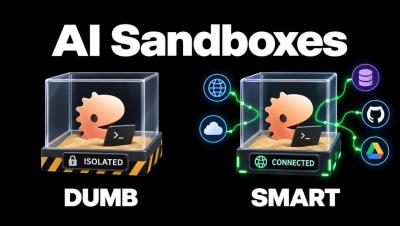
Stop Running Claude Code on Your Laptop: 2 Types of Agent Sandbox

Every week there's a new agent sandbox, and they all promise the same thing: a safe place for your agent to run code. In this video we split them into two types, dumb sandboxes and smart sandboxes, so you can sort any provider by what it can actually do instead of how it's marketed. You'll see where today's providers sit, why dumb sandboxes still have a real place, and how to pick the kind your agent's job needs.

How database professionals can use AI to improve everyday work: takeaways from PASS Summit 2026

Gorman is a Database and AI Advocate and Engineer at Redgate She's the previous director of Data and AI at Silk, and the Oracle SME in Azure at Microsoft. With a robust background in cloud technology and a passion for promoting its merits and potential, I am thrilled to spearhead conversations and actions that help shape the future of this industry. Kellyn has authored numerous technical books, white papers and solution repositories in GitHub on database, AI and engineering topics.

AI agents belong on your Kubernetes platform

In Kubernetes, pods get a new IP every time they restart, so an IP can’t tell you which workload it is. Platform teams learned to identify workloads by labels and identity instead. AI agents are now teaching them a second lesson: an agent’s code can’t tell you what it will do. I believe AI agents belong on the Kubernetes platform. Not beside it, not around it, and not left to each team to secure alone. On it: identified, governed and contained like every other production workload.

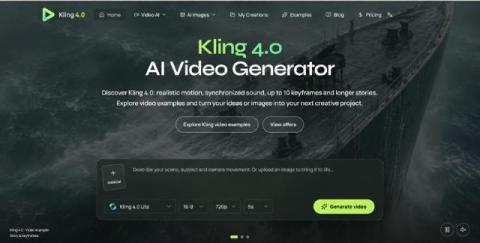
How to Turn DevOps Runbooks into AI Explainer Videos with Kling 4.0

New engineers learn a runbook faster when they can see the shape of the procedure: what state the system starts in, what changes at each step, and where to stop. Reading the document still matters, because the maintained runbook remains the authoritative source. A short animated explainer can sit beside it during onboarding and show the order of state changes as simple schematics, without anyone recording a production dashboard.

How Industries Utilise Decision Intelligence Systems

Decision intelligence (DI) combines behavioural science, data science, and artificial intelligence (AI) to automate and manage decision-making processes. It helps businesses from almost any industry optimise and develop forward-thinking processes, allowing them to put plans in place that predict and prevent potential problems. Decision intelligence systems go beyond the traditional methods of business intelligence (BI) that simply use data to describe and outline what is happening or has happened.

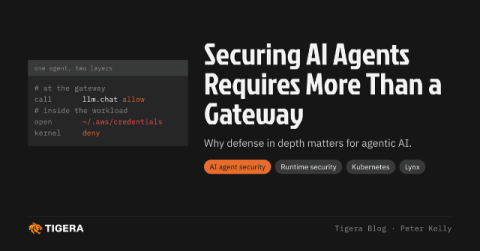
Securing AI Agents Requires More Than a Gateway

Over the past year, I’ve spent a lot of time talking with engineering and platform teams about how they’re deploying AI agents. The conversations are changing. Six months ago, most were focused on getting agents into production. Now, increasingly, the question is how to secure them once they’re there. It’s a familiar transition. We’ve seen it with containers, Kubernetes, microservices, and cloud infrastructure.
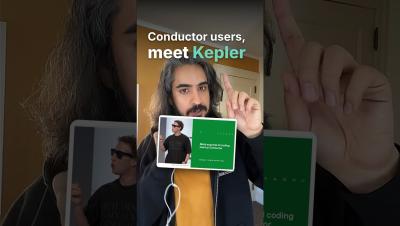
Conductor's joining Meta, so meet Kepler #conductor #softwaredevelopment

If you missed the news, Meta acquired Conductor. If you liked launching multiple coding agents in parallel there, we've got something for you. Kepler ADE by GitKraken lets you run multiple agents in parallel, start sessions straight from a GitHub issue, and keep an eye on them from your phone.

Connect Claude to PagerDuty Instantly with Claude Auto-Connect

This blog post is part of PagerDuty’s ongoing series on how we’re helping customers navigate their journey towards autonomous operations. Read on to learn about how PagerDuty’s integration with Claude auto-connect recently announced in EA builds towards this vision. MCP has quickly become the primary way agents connect to the systems that run modern operations, with more agent traffic reaching production systems every month.

Third party service monitoring is now in the API, MCP and CLI.

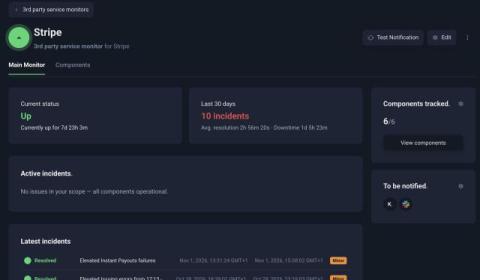
We’re happy to announce that you can set up Third party service monitoring from the UptimeRobot API, MCP server and CLI too, and get alerted when a service your product depends on has an outage. Add a provider from your deploy pipeline, ask your AI assistant whether Stripe had an incident last night, or check a provider’s status from your terminal.

Run cost-effective, always-on agents to monitor your environment: the engineering behind Watchers

Alert rules are great for the failures you can predict, but they fall short on the ones you can't. With the advent of modern AI, you might think the solution is to swarm your stack with agents that monitor every last detail, but that can quickly lead to astronomical bills. And those are the gaps Watchers fill: catching what alerts miss while keeping costs in control. Generally Available as of ObservabilityCON 2026, Watchers are always-on agents in Grafana Assistant.

Investigate Kubernetes health and processes with the Datadog MCP Server

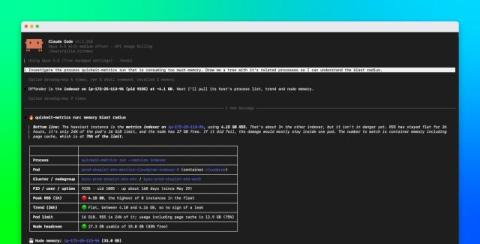
When investigating issues with a Kubernetes service, SREs and platform engineers need to understand what’s happening across its supporting infrastructure. For example, is a process still running? Did it restart? Is the scheduler struggling to place pods? Finding the answers to these questions often requires engineers to search process inventories, examine resource metrics, and query Kubernetes control plane telemetry.

Conductor is joining Meta. What that means if you run parallel agents

On November 4, Conductor announced it’s joining Meta. If you run your agents in Conductor, you probably saw the post that morning. I know I saw it when my coworkers started sharing the link in Slack. If Conductor was your main tool, this kind of sucks. You didn’t plan to go shopping for a new one this month, and 2 weeks to get off Cloud is pretty tight, especially if you built scripts around it.

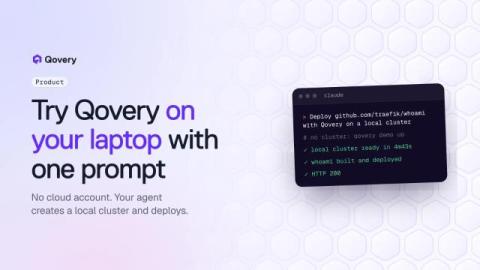
Try Qovery on Your Laptop: Ask Your Coding Agent, Get a Running App

The Qovery agent skills now create a free local Kubernetes cluster in Docker when your organization has none, then deploy your project to it. One prompt in Claude Code, Cursor or OpenCode, no cloud account, no credit card. Measured: 4 min 43 s for the cluster, 2 min 40 s to build and deploy a GitHub repository. Romaric founded Qovery to make Kubernetes accessible to every engineering team. He writes about platform strategy, developer experience, and the future of cloud infrastructure.

Bindplane's AI Agent is now generally available, plus what else we're bringing to KubeCon NA 2026

KubeCon + CloudNativeCon North America is in Salt Lake City this week, and Bindplane will be at booth 253. Come say hi! We have four talks and we're bringing a ton of cool updates with us. So many of you were eager to try Bindplane Agent while it was in early access. That changes today. Bindplane Agent is generally available. If you've built pipelines in Bindplane before, you know the drill. Pick a source, pick a destination, add processors in the right order, fill in the settings, roll it out.

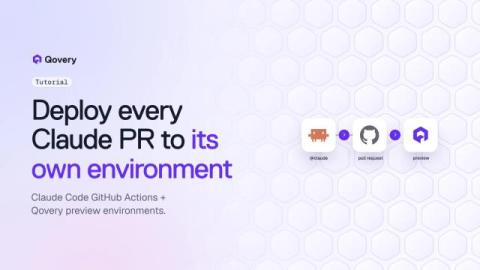
Claude Code + GitHub Actions: Deploy Every Claude PR to Its Own Environment

Set up anthropics/claude-code-action so @claude turns issues into branches and pull requests, then let Qovery preview environments deploy each Claude PR to its own full-stack environment on your Kubernetes cluster, post the URL on the PR, and delete it on merge. Romaric founded Qovery to make Kubernetes accessible to every engineering team. He writes about platform strategy, developer experience, and the future of cloud infrastructure.

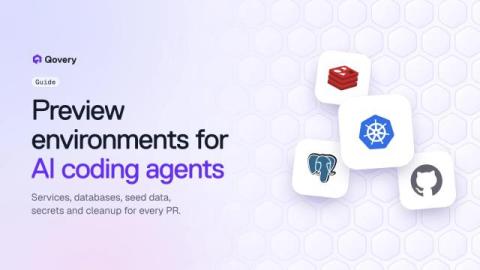
Preview Environments for AI Coding Agents: The Full-Stack Guide

Agent-written pull requests need a running environment before anyone can review them. What a full-stack preview environment needs (services, databases, seed data, scoped secrets, cleanup, cost caps), how Vercel, Netlify, Argo CD ApplicationSets, homegrown GitHub Actions + Terraform and Qovery compare, and how to run it on your own cluster for free. Romaric founded Qovery to make Kubernetes accessible to every engineering team.

OpenRouter Alternatives: How to Choose a Model API Gateway for Your Stack

Teams searching for openrouter alternatives are usually trying to solve a practical problem: they need a different model catalog, billing setup, routing behavior, modality mix, deployment boundary, or support arrangement. There is no one-for-one replacement that is best for every workload. A useful comparison starts by classifying the service you need, then tests a short list against real requests.

AI ROI measurement: what the 23% do differently

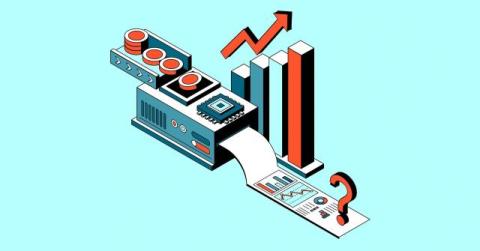
23% of finance leaders can both allocate AI spend systematically and prove its return to a board. Only 3% of them failed to secure an AI investment, against 19% of everyone else, and they spend what their peers spend: 41% plan a FY2027 increase of 20% or more, against 38%. Measuring return alone buys nothing, because companies claiming ROI they cannot allocate report the same board-proof gap as companies claiming no return at all.

AI cost visibility: how to see AI spend as it happens (2027)

AI cost visibility is the ability to see what AI spend is buying, by person, team, feature, customer and activity, before the bill arrives. The invoice can't provide it: it records tokens and hours, not decisions. It comes from capturing each AI event as it occurs, with business context attached, and reconciling to the bill. Take 50 million input tokens and 10 million output tokens in a month. On Claude Haiku 5.5 that is $10. On Claude Fable 5.1, the same tokens cost $1,000.

Jira Agent in Slack | AI-Native Software Development | Atlassian

See how to add the Jira agent to a Slack channel and use @Jira to create and update Jira work items from a conversation. The agent uses the thread’s context to fill in the details, while status changes and comments sync back to Slack. Spend less time copying context into Jira or switching tabs, and keep work moving in the thread.

How we investigated prompt cache misses with Datadog

Our internal AI applications repeatedly send the same system instructions, tool definitions, and conversation history to large language models (LLMs). Prompt caching lets models reuse this data from previously processed input, reducing the cost of handling repeated content. But while investigating our LLM costs, we found applications that weren’t benefiting from caching, even when it appeared to be enabled.

AI Budgeting: Are We All Just Winging It?

Your AI budget was locked in January. Then the CEO said everyone should be building. Now AI spend is spread across 20 vendors, company credit cards, month-to-month invoices, and enterprise plans, and the board wants to know what it all returned. Emily Allen, Director of Finance & Accounting at CloudZero, shares how she's rewriting the rulebook for AI spend governance, budgeting, and forecasting. She uses CloudZero to see every dollar of AI spend by team, project, and feature.

Any agent anywhere: How to use Grafana Cloud with Claude, Cursor, and any other AI agent

AI agents are becoming part of everyday engineering workflows, helping teams write code, troubleshoot issues, and automate tasks. But to be truly useful in production, these agents need access to more than code. They also need observability data and context to understand what's happening across your systems, investigate problems, and help you take action.

Occupational Safety Tech: How Modern IoT and Sensors Are Preventing Future Worksite Toxins

Chemicals lurk in industrial air unnoticed until someone gets sick. According to estimates from the International Labour Organization, over one billion workers face hazardous substance exposure globally every year.

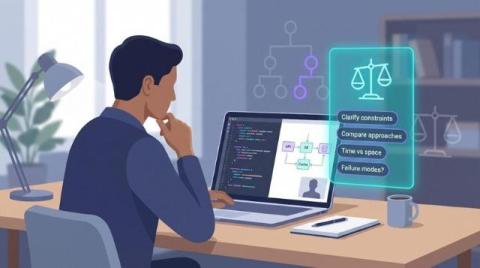
Best AI for Technical Interviews When Trade-Offs Count More Than the Code

Generative AI can crank out code, yet interviewers judge how you think. CoderPad's 2026 survey found that 66 percent of hiring leads praise candidates who fix AI errors, while 56 percent reward clear trade-off explanations. Stack Overflow's 2025 Developer Survey echoes this: 66 percent of developers name AI solutions that are "almost right, but not quite" as their biggest AI frustration. Canva agrees, applauding applicants who "offer alternative approaches and weigh trade-offs thoughtfully."

We Rebuilt Harness for Agents: Introducing a New Platform Experience

Hundreds of millions of deployments taught us what delivery takes. The new platform experience applies it to a world where agents do the work. A year ago, the question was whether agents could write code. That question is settled. The new question is whether they can ship it. Building an agent is easy. Running one inside a real delivery process is not. Real work runs through pipelines, approvals, data, and quality gates. Delivery has always been designed around the people doing the work.

GitHub's AI Coding Boom Exposes a Bigger Security Problem

GitHub's AI coding boom is exposing a major problem in software security. As AI coding agents generate more code and developers push commits faster than ever, can traditional DevSecOps and shift-left security practices keep up? In this episode of ShipTalk, cybersecurity leader Jake Bernardes breaks down GitHub Universe's AI coding trends and argues that shift-left security is dead in the age of AI-generated code.

Highlights from Oracle AI World 2026

Oracle AI World 2026 brought customers and partners to Las Vegas to explore how AI can support their existing business systems. At the event, Datadog participated in a session with Peloton Consulting Group and hosted a booth covering observability across Oracle Fusion Cloud Applications, Oracle Database, and Oracle Cloud Infrastructure (OCI).

Hillclimbing Meets Production: What Changes When the Agent Runs Your Infrastructure

On 28 September, Anthropic published a playbook for designing evals and hillclimbing against them, and shipped two commands that put it to work. In Claude Code, /claude-api build-eval interviews you and builds an eval inside your codebase. /claude-api hillclimb then improves your app against it, one change per round, with a held-out split to catch overfitting. It is a good piece of work, and the results are concrete.

How to fix AI-generated code automatically #aicoding #devops #softwareengineering #techshorts #qa

AI coding agents write code fast, but without real-world context, they create buggy software that turns your users into a QA team. Speedscale’s production context layer captures real traffic and dependencies, giving your AI assistant the power to safely rehearse and test code changes before deploying. Learn more: speedscale.com.

Accelerate troubleshooting with Monitor AI Insight

Monitoring used to mean checking that your dashboards looked fine and starting to troubleshoot when something broke. That approach is outdated. Today, the health of your applications directly affects your business. A slow checkout page, a lagging database, or an unresponsive server costs you customers, revenue, and trust. A problem that once took hours to identify and fix is no longer acceptable. This is where AIOps comes in.

Kubex Agentic AI Platform: Secure Context at the Edge

Table of Contents In Part 1: Agentic AI at Scale – Building the Kubex Agentic AI Platform of this series, we laid the foundation for scaling agentic AI across cloud infrastructure. We examined why traditional ops workflows get stuck in reactive loops of dashboard watching, why static context limits intelligence, and how the Kubex platform uses context engineering and a distributed nervous system to bridge the gap between telemetry and deterministic actions.

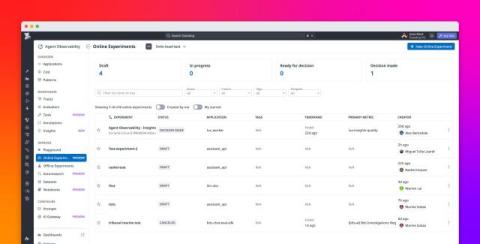
Compare AI agent changes with Online Experiments in Agent Observability

Improving an AI agent often involves changing its prompts, models, retrieval methods, or tools. But determining whether those changes actually improve performance can be difficult. A revised prompt might produce better answers for a handful of test cases but perform poorly on unexpected user requests. A cheaper model might reduce token costs while introducing tool-calling errors or longer execution times.

Good Agents Need Good Managers: What We Heard at Innovation Week

I used to joke that I got my best parenting ideas from management books, and my best management ideas from parenting books. Now, I'm extending it to agents. Hear me out. When you're teaching a teen how to drive, you don't hand them the car keys on day one. You start in an empty parking lot. You ride along and ask them to talk through what they're doing.

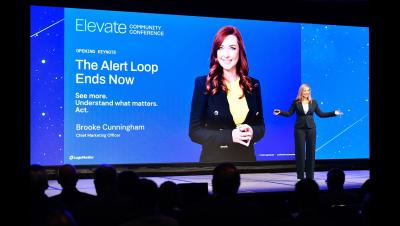
LogicMonitor Elevate 2026 Keynote: Trusting AI to Act

LogicMonitor Elevate 2026 keynote: what it takes to trust AI to act in IT operations. Built for IT ops leaders, SREs, and MSPs. The Chicago opening keynote covers moving beyond the alert loop, where people have acted as the integration layer between tools. IT teams are automating incident response by giving AI context, clear guardrails, and governance, with people accountable and in control. @globalfoundries CIO Vishal Mehra shares how his team's doing it.

Google's Stock Drop Reveals What AI Is Missing

Google just reported $51.4 billion in quarterly capital spending. Anthropic has filed for an IPO. And GitHub's AI coding explosion is raising serious questions about software security. Is the AI boom creating real business value, or are we heading toward an AI bubble correction? In this episode of ShipTalk, Adam Arellano and Martin Reynolds are joined by cybersecurity expert Jake Bernardes, CSO at Gambit, to break down three major developments reshaping artificial intelligence, software development, and cybersecurity.

What Is the Harness Software Delivery Agent? | AI-Powered CI/CD Explained

What is the Harness Software Delivery Agent? Harness Software Delivery Agent is an AI-powered software delivery solution that helps teams automate CI/CD pipelines, infrastructure workflows, deployments, and troubleshooting, moving code from commit to production while enforcing existing policies and approvals. In this video, we explain how Harness Software Delivery Agent works and how it helps DevOps teams, platform engineers, and developers automate software delivery.

4 Signs Your IT Operations Are Ready for AI Agents

Is your IT operations model keeping up with growing complexity? From rising incident volumes to costly outsourcing and unnecessary escalations, here are 4 signs it may be time to rethink how your IT operations run. Discover why enterprises are turning to AI agents to reduce manual work and scale operations.

AI Agent Security: Applying the OWASP Top 10 Across the Software Development Lifecycle

Learn how to secure AI agents across development, testing, deployment, and runtime using the OWASP Top 10 for Agentic Applications. A single poisoned web page can be enough to hijack an AI agent. As organizations move from AI assistants that generate responses to autonomous agents that take action, the security risks are changing. An agent can access sensitive data, execute code, modify configurations, and interact with external systems.

Agentic AI Adoption Starts With Knowing What to Prioritize First

Every enterprise board now expects an agentic AI plan. Far fewer operating leaders can say which workflow should carry it first, and why. That debate ran through the closed-door roundtable jointly hosted by iOPEX and Soroco in London, with senior operations and transformation leaders from telecom, banking, retail, financial data, and life sciences.

Notion AI pricing: the real per-seat math for an organization-wide rollout

Notion AI comes with the Business plan at $20 per member per month and with Enterprise at custom pricing, per Notion's pricing page; the standalone $10 add-on was retired in May 2025, and Free and Plus get a limited AI trial. Custom Agents add metered Notion credits at $10 per 1,000 monthly. Yearly billing saves up to 20%.

Reliability in the AI Era: AI That Works the Incident With You

Being responsible for the reliability of services people count on every day isn’t easy. Customers expect everything to work, all the time, and when it doesn’t, someone has to answer for it. Whether you need to get yourself out of bed at 3 a.m. or step away from a family dinner, your job is to quickly diagnose the problem and fix it to ensure your operations get back up and running quickly before customers notice. But it doesn’t always go like that.

Meet Paige, PagerDuty's SRE Agent: Faster Fixes Today, Fewer Incidents Tomorrow

Today, we’re introducing Paige, PagerDuty’s SRE Agent. Built on over 16 years of operational data, Paige works as a member of operations, engineering, and DevOps teams, coordinating signal intelligence, incident management, and automation. Paige learns from every incident, so every incident improves the next response. Each resolution is written back into shared memory, making every response sharper than the last.

Honeycomb Team Agents: AI SRE Done Right

The best alert is the one that never fires. Picture an idyllic Tuesday afternoon: last night's release nudged checkout p99 up 41%, but an agent noticed. Nobody got paged, and your SLOs didn't start burning. Instead, the agent acted and already narrowed it down to one retry change. It filed a ticket for the Payments team and flagged the PR. By the time anyone would have noticed, the fix is in review. That's what SRE was always supposed to feel like.

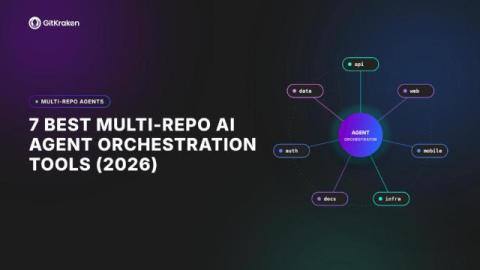
7 Best Multi-Repo AI Agent Orchestration Tools (2026)

Running multiple AI coding agents in parallel across repositories sounds like a productivity multiplier. In practice, it creates a coordination problem: conflicting file edits, orphaned branches, and zero visibility into which agent finished what. AI coding agent orchestration tools exist to solve exactly this, and Kepler by GitKraken gives you one surface to direct every agent from backlog to merged pull request. This guide compares seven tools built for multi-repo, multi-agent development workflows.

Evaluate your AI agents with Fireworks AI models in Datadog Agent Observability

Teams that build agents on open models hosted on Fireworks AI, such as GPT-OSS, Kimi, GLM, Qwen, and MiniMax, need a reliable way to measure whether their LLM applications and agents are giving accurate, safe, and helpful answers efficiently. Datadog Agent Observability now supports Fireworks AI as a model provider, so you can get end-to-end visibility into your agents built on Fireworks AI, from traces and token usage to quality evaluations.

Finding performance wins in our own traces with a coding agent

For the last few weeks I’ve used a coding agent to find and fix backend performance issues in Sentry, starting from the traces Sentry sends to itself. Most of the fixes only changed a line or two. But together, they removed hundreds of millions of queries a week, and some expensive lookups became hundreds or thousands of times faster (more details on that below).

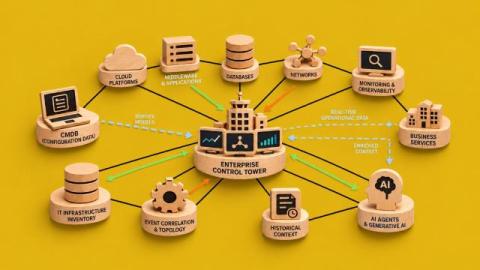
Why AI-Ready IT Operations Need More Than a Traditional CMDB Now?

Configuration Management Databases (CMDBs) have long played an important role in IT Service Management, providing a structured record of technology assets, their configurations and relationships. For enterprises managing complex IT environments, they remain a valuable foundation for understanding infrastructure and supporting operational processes.

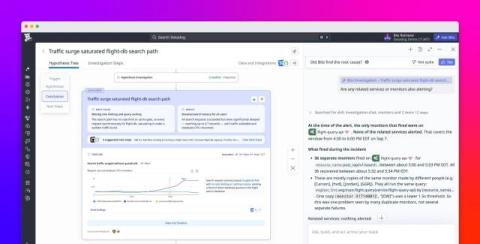
Bits investigations are faster, more accurate, and cost less

When we launched Bits Investigation in December 2025, our goal was to give teams an always-on agent that could investigate every alert and reduce mean time to resolve (MTTR). Since then, we’ve focused on making Bits faster, more cost effective, and even more accurate. At launch, the average investigation cost $25 and took 11 minutes.

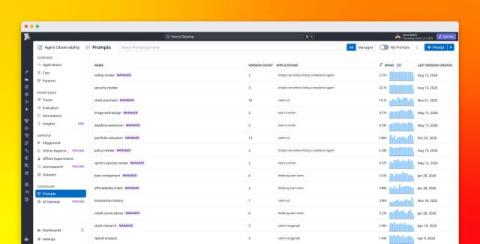
Manage and deploy LLM prompts with Datadog

Prompts are an important part of LLM application behavior, but teams often manage them alongside application code or across separate notebooks and configuration files. This can make prompt changes dependent on application releases and make it difficult to understand which version is running in each environment. When a change affects application quality, latency, or cost, teams also need a way to connect that behavior back to the prompt version that produced it.

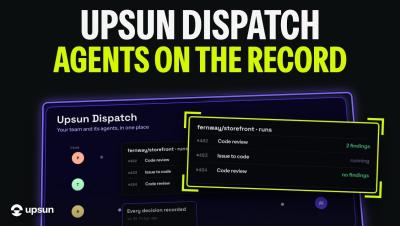
What is Upsun Dispatch? AI agents that ship with your team

Your engineers are writing more code than ever with AI, but your team isn't shipping more product. The code waits for review, agents run on personal laptops and accounts, and nobody can say what any of it costs. In this overview, we show what Upsun Dispatch is: where your team and its agents ship together, with every decision recorded and every dollar tracked. We get into.

AI budget season: 87% are raising it, 61% can't justify it

87% of finance leaders are raising their AI budget for FY2027, 45% of them by more than 20%, even though 61% already spend more on AI than they can justify. Most can't see where it goes: 54% can't break AI spend below a rough category, so budgets default to the total and keep climbing. The teams that allocate spend, tying each AI dollar to the team, product, or outcome behind it, are the ones who can defend the number to a board.

Harvey AI pricing in 2026: every reported number, and how to build the business case without a rate card

Harvey AI pricing is not published: every deal is sales-negotiated. Reported figures across procurement research converge on roughly $1,200 per lawyer per month at the base, 20-to-25-seat minimums, and 12-month terms, putting reported entry floors near $290,000 to $360,000 a year. Premium bundles run higher. No free tier, no monthly plan, no self-serve. Every figure on this page is labeled for what it is: disclosed by Harvey, reported by named research and journalists, or computed from those reports.

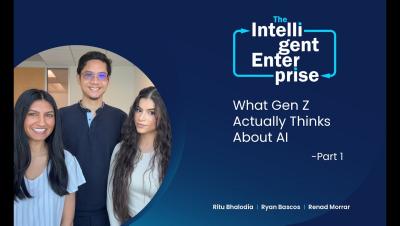
Episode 19- What Gen Z Actually Thinks About AI

In Part 1 of this conversation, three early-career professionals at Digitate — Ryan Bascos, Renad Morrar, and Ritu Bhalodia — join The Intelligent Enterprise to share what it actually feels like to start a career in the age of AI: the tools they rely on, the concerns they carry, and what their generation sees that others might be missing.

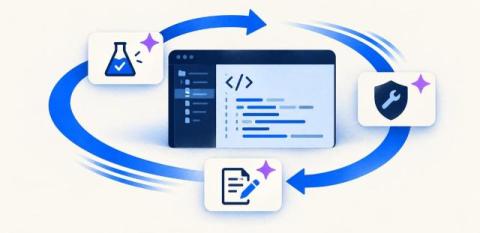
Agentic Pipelines is generally available: run agents in Cloud or on your own Linux runners

We’re excited to announce that Agentic Pipelines is now generally available across all paid Cloud Bitbucket plans. You can run agents on our cloud runners or on self-hosted Linux Docker runners, with support for more runner types coming soon. With this launch, Bitbucket Pipelines evolves from a CI/CD tool into an intelligent workflow engine that increases developer productivity by letting agents handle routine engineering tasks.

What a 'Kill Switch' Actually Means for Your Agent Fleet

In short, in the five weeks to 27th October 2026, Okta, Satya Nadella, the Cloud Security Alliance and Salesforce each put the words “kill switch” or “emergency brake” next to AI agents, and the AI Kill Switch Act, introduced in the US House on 23rd July, would require the largest model providers to be able to throttle, suspend or shut their systems down on order. Every one of those switches stops something, and none of them stops the same thing.

Grafana Assistant Demo: AI-Powered Root Cause Analysis and Remediation

See how Grafana Assistant uses AI to investigate incidents, identify root causes, and help remediate application problems. In this demo, Engineering Manager Ksenia Yadav and Staff Product Manager Maurice Rochau show how AI-powered observability supports the move toward autonomous operations, from detecting problems to generating code fixes and validating their impact in production. Explore how Grafana Assistant uses context from your telemetry, infrastructure, incidents, business data, and code to.

Cyber Security is escalating on both sides

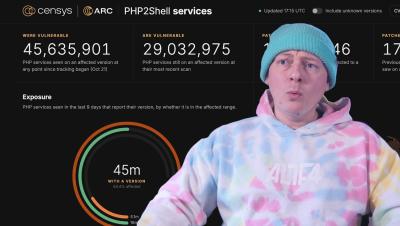
The nature of cyber security is changing. In this video, I do a brief recap of a few of the compromises of the past couple weeks as well as highlight how our role as engineers is changing. Attackers have an easier time than ever in watching repos for changes to exploit 0-day vulnerabilities. But, it isn't all doom and gloom as long as we put in the effort. AI is creating a bit of an arms race between attackers and maintainers of sites and services, but there are actually more powerful tools available to defenders through exclusive programs like Daybreak, Glasswing, etc.

AI Is Forcing Finance to Redefine KPIs

AI Budgeting for Finance: Last Year vs. Now In this video, Emily Allen, Director, Finance & Accounting at CloudZero, explains how AI planning changed in a single year. Instead of starting from a vendor commit or the current run rate, she’s treating AI spend as its own category and analyzing it bottom-up. That opens a new question for finance: “What does good look like?” With a year of data, finance teams can start benchmarking AI spend over time and check whether what they approved actually paid off.

The $600 AI Cap That Sent Employees Golfing

In this video, Brady Lenahan, VP of Sales at CloudZero, shares what he’s hearing from customers when the cap hits before the month ends: employees who’ve built their workflows around AI stop working productively and wait for next month. Some go golfing, some clean the garage. Either way, finance loses both the productivity and the visibility. There’s a better option than capping AI spend you can’t see.

How to Capitalize AI Spend Without the Gray Area

In this video, Emily Allen, Director, Finance & Accounting at CloudZero, explains why AI capitalization is still unclear for most finance teams, and how CloudZero gives them a repeatable approach. As AI writes more of the code, finance needs to know which AI spend went to qualifying development work and which should be expensed. CloudZero records which project each AI coding session served, what kind of work it was, and what it cost, so finance has the evidence behind every decision.

How to monitor Kafka Consumer Lag with an AI Agent?

TL;DR Managing Kafka consumer lag manually is time-consuming and error-prone. Today, we'll show you how to create a fully automated consumer lag monitoring agent in just 5 minutes using Aiven Managed Agents. This agent will monitor your Kafka services and send real-time alerts to Slack when consumer lag is high.